
Within the ever-evolving world of well being and wellness, the seek for the final word anti-aging and performance-enhancing dietary supplements has led to the invention of some outstanding compounds. Amongst them, Alpha-Ketoglutarate (AKG), Pyrroloquinoline Quinone (PQQ), and Ergothioneine have gained vital consideration for his or her potential to spice up well being, battle ageing, and improve total efficiency. On this complete information, we’ll discover what these dietary supplements are, their advantages, how they work, dosing suggestions, potential uncomfortable side effects, and the place you should buy them.
In today’s competitive nutraceutical landscape, ingredient selection isn’t just about marketing — it’s about scientific foundation, regulatory compliance, and application relevance. This guide unpacks three key ingredients often cited in “anti‑aging” supplement formulations:
✔ Alpha‑Ketoglutarate (AKG)
✔ Pyrroloquinoline Quinone (PQQ)
✔ Ergothioneine
We break down what they are, how they function as raw materials, how formulators use them, and what buyers should know when sourcing in bulk.
🧠 What These Ingredients Are — At a Glance
| Ingredient | Profile | Common Uses | Supplier Keywords |
|---|---|---|---|
| AKG | Metabolic intermediate (TCA cycle) | Energy metabolism support, antioxidant precursor | alpha ketoglutarate bulk supplier, AKG raw material |
| PQQ | Redox cofactor with antioxidant activity | Mitochondrial support, energy formulations | PQQ extract supplier, pyrroloquinoline quinone bulk |
| Ergothioneine | Natural amino acid‑derived antioxidant | Cytoprotection, stress resilience in formulas | ergothioneine ingredient manufacturer, ET nutraceutical grade |
1. Alpha‑Ketoglutarate (AKG) — Raw Material & Application
What Is AKG?
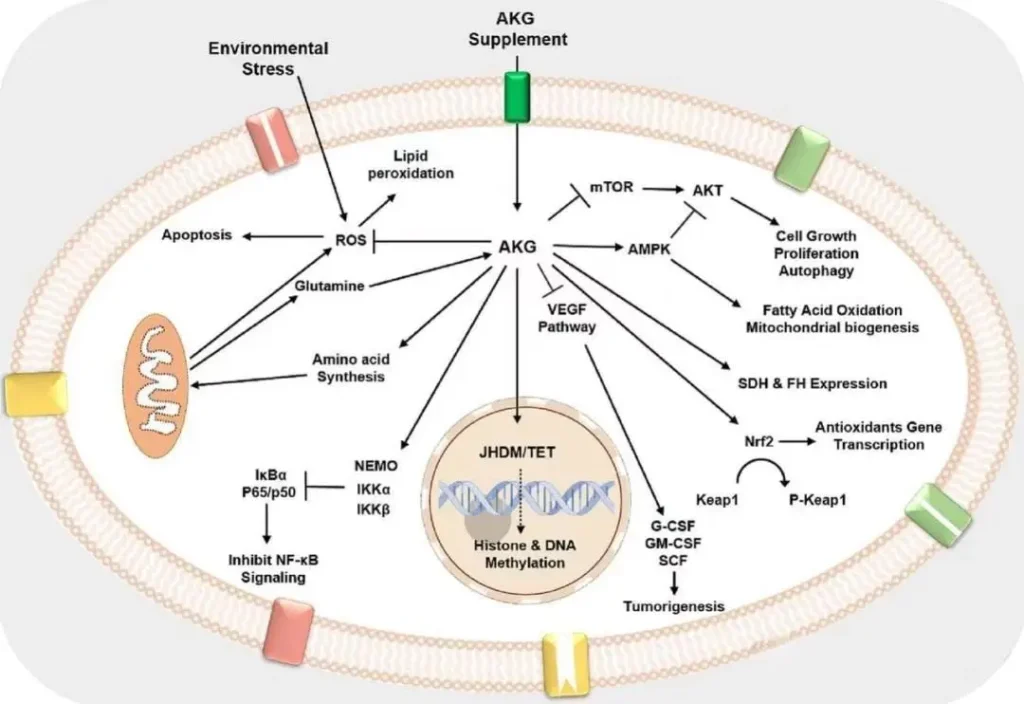
Alpha‑Ketoglutarate (AKG) is a naturally occurring compound in the citric acid (TCA) cycle, central to cellular energy processes. In food or supplements, AKG often appears as a stable, crystalline powder suitable for standardized formulations.
AKG is widely used as a raw material to support energy‑related formulations and antioxidant systems due to its role in metabolic pathways. It is neutral in taste, compatible with capsules, tablets, and powdered blends.
Industry Applications
Common product categories using AKG include:
- Performance & energy supplements
- Joint and recovery blends
- Metabolic support formulas
- Powdered mixes & functional beverages
AKG’s endogenous nature makes it a versatile ingredient, particularly when combined with amino acids or vitamins.
Regulatory & Safety Notes
There are limited human clinical studies of AKG for aging processes. Most scientific literature describes its metabolic and antioxidant roles rather than therapeutic claims, and further research is needed for specific health outcomes. PubMed
Note: As with all nutritional ingredients, structure/function claims in marketing must align with local regulations.
2. Pyrroloquinoline Quinone (PQQ) — Redox Co‑factor for Mitochondrial Support
Ingredient Overview
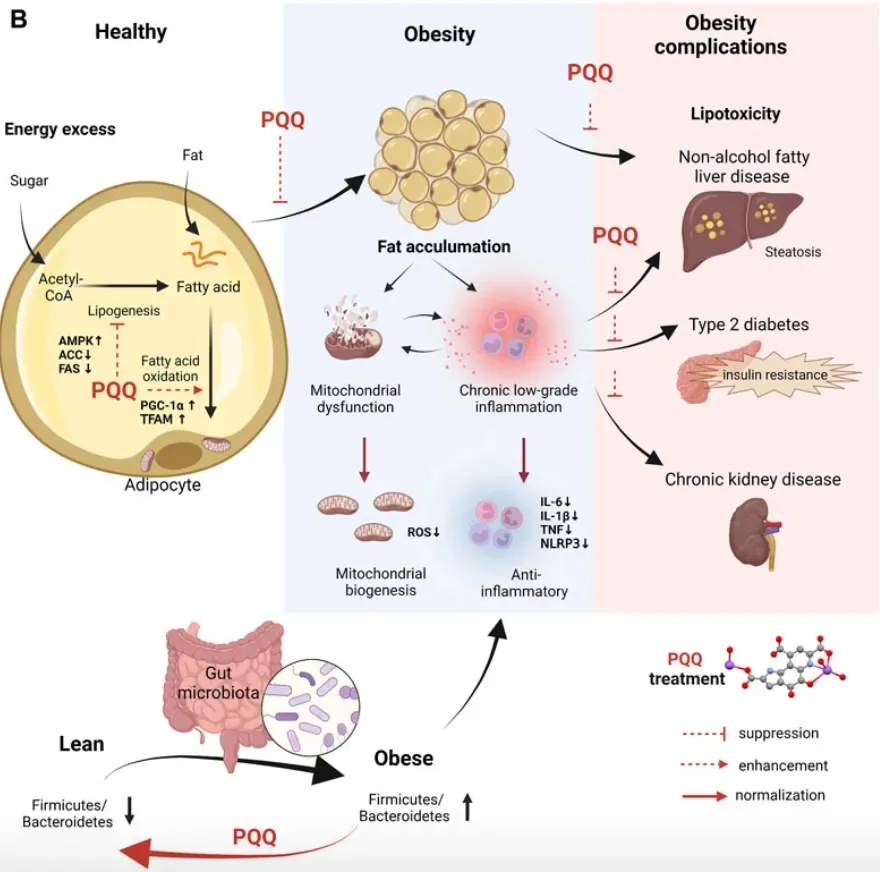
PQQ is a redox‑active quinone that acts as a cofactor for oxidative enzymes. In dietary supplements, it is supplied in a disodium salt form, suitable for capsules and powdered blends.
The ingredient’s appeal lies in its cellular energy and antioxidant pathways, positioning it as a candidate for formulations that aim to support metabolic processes.
Functional Applications
PQQ is popular in products such as:
- Mitochondrial health blends
- Energy and cognitive support formulas
- Multi‑nutrient capsules and packets
- Anti‑oxidant synergy stacks
Formulators frequently pair PQQ with CoQ10, NAD+ precursors, or B‑vitamin complexes.
Scientific Basis & Regulatory Position
PQQ has been evaluated in human studies and animal models for safety and metabolic involvement. Clinical research indicates no significant adverse effects at studied doses, and its safety profile is supported under intended use as a dietary ingredient. U.S. Food and Drug Administration
While research discusses cellular metabolism and antioxidant activity, avoid health claims that imply treatment or disease modification unless supported by regulatory submissions.
3. Ergothioneine — A Stable Antioxidant from Nature
What It Is
Ergothioneine (ET) is a naturally occurring thio‑histidine derivative found in fungi and certain plants. It’s distinct from common antioxidants due to its specific transporter in human tissues, hinting at physiological relevance. PubMed+1

Application in Formulations
In nutraceutical design, ergothioneine is used as:
- Antioxidant support ingredient
- Cellular resilience component
- Functional mushroom extract raw material
Its high stability and bioavailability make it suitable for capsulation and complex blends.
Scientific & Regulatory Considerations
Ergothioneine is increasingly recognized in academia for its antioxidant and cytoprotective potential. Research suggests it accumulates in human tissues via a dedicated transporter, implying utility in nutritional formulations. PubMed
However, while scientific discussions reference its role in cellular stress pathways, avoid positioning it as a cure or treatment.
🔬 Scientific Evidence: What Research Says
Below are examples of research contexts relevant to these ingredients — useful when building product descriptions or supplier vetting materials.
- AKG’s role in cellular metabolism and antioxidant pathways has been described in review literature, but human aging‑specific outcomes require more evidence. PubMed
- PQQ safety and cellular involvement studies indicate no adverse effects within studied dose ranges. U.S. Food and Drug Administration
- Ergothioneine’s biochemical functions as a dietary antioxidant and cytoprotectant are supported in multiple research reviews. PubMed
👉 Explore PubMed entries for deeper insights:
- Ergothioneine as a Functional Nutraceutical — PubMed PubMed
- AKG in metabolic processes — PubMed Review PubMed
- PQQ human safety profiles — FDA GRAS documents U.S. Food and Drug Administration
🏭 Sourcing & Specification: What Buyers Should Request
When procuring bulk raw materials:
✔ AKG
- Purity: ≥98%
- Form: Powder
- Solubility: Water / formula‑specific
- Certificates: COA, Heavy Metals, Microbial, Stability
✔ PQQ
- Purity: ≥99%
- Form: Disodium salt or free acid
- Certificates: COA, Solvent Residue, Stability
✔ Ergothioneine
- Purity: ≥98%
- Form: Powder
- Certificates: COA, Heavy Metals, Microbial
Quality documentation like COA, MSDS, stability data, and traceability improves buyer confidence and aligns with international B2B procurement standards.
🧩 Formulator Tips: Pairing & Compatibility
Although not therapeutic claims, formulators often:
- Combine PQQ with CoQ10 and NAD+ precursors for synergistic energy pathways
- Use Ergothioneine in antioxidant complexes alongside vitamin C or polyphenols
- Include AKG with amino acids or B‑vitamins in recovery and metabolic blends
Always conduct compatibility and stability testing in specific formulations.
📊 FAQ — Industry & Buyer Guide
Q1. Are these ingredients approved for use in dietary supplements?
All three are used as dietary ingredients with documented use in finished products. Always verify local regulatory compliance for labeling and claims.
Q2. What purity should I expect for bulk supplies?
≥98% for AKG and Ergothioneine; ≥99% typically for PQQ. Always request COA.
Q3. Can I mention health benefits on labels?
Only structure/function claims supported by internal substantiation and compliant with FDA, EFSA, or local regulators.
Q4. What certifications should suppliers provide?
COA, GMP compliance, heavy metal testing, microbial limits, and packaging QA.
Q5. How do I vet a supplier?
Check audit history, compliance documentation, references from other brands, and shipping traceability.
📌 Conclusion — How This Impacts Your Product Strategy
Choosing raw materials like AKG, PQQ, and Ergothioneine demands both scientific comprehension and commercial insight. For product developers and B2B buyers, focusing on ingredient quality, regulatory alignment, and supplier credibility is just as important as functional positioning.
Bulk Supply & Technical Support
Get direct factory quotes, COA, and MSDS within 12 hours. We support bulk supply and custom specifications.