R&D / Formulation
Define dosage form, pH, processing temperature, target assay, dispersion and sensory requirements.

AIHerba® — the specialty ingredient brand of Shaanxi Zhonghong Investment Technology Co., Ltd. — supplies botanical extracts, functional carbohydrates, selected sweeteners, color ingredients and food formulation materials for B2B manufacturers.
Compare the exact ingredient identity, commercial grade, assay basis, composition and intended market before choosing materials for beverages, gummies, nutrition bars or dry mixes. Food-use suitability is assessed for the selected grade and destination.
Define dosage form, pH, processing temperature, target assay, dispersion and sensory requirements.
Review offered-lot COA, grade, food-use documentation, MOQ, packaging and destination-specific quotation.
Choose by technological function and material identity, not by a broad health claim.
Selected amino acids and botanical extracts for drink concepts; establish permitted use and concentration.
L-Theanine · GingerolOat and yeast glucans differ in structure and physical behavior; select the source before the percentage.
Oat β-glucan · Yeast β-glucanSource-specific pigments require color strength, pH and light stability assessment and applicable color-additive review.
Anthocyanins · Colors portfolioCompare Mogroside V and steviol glycoside profiles, aftertaste, and market-specific permitted uses.
Monk Fruit · SteviaAcidulants and humectants for pH or texture design; qualify the exact food-use grade.
Citric Acid · GlycerinDefine component ratios, carrier restrictions, particle properties, allergen profile and final blend acceptance criteria.
Custom blending & manufacturingA material listed in our catalog is a starting point for sourcing, not an authorization for use in every food category or country.
Published grade references help prepare a quotation. The current commercial specification and signed lot COA govern purchase approval.
Published HPLC assay target; fermentation-derived listing. Confirm L-isomer, assay basis and food-use eligibility.
View L-TheaninePublished catalog target. Confirm source-specific analytical method, viscosity, molecular weight where relevant and gluten test evidence if required.
View oat β-glucanListed HPLC grades; review pungency, extract form, carrier and actual processing performance.
View gingerol gradesPublished 25%, 50% and 60% Mogroside V targets; compare sweetener profile and permitted food categories.
View Mogroside V gradesPublished Reb A ≥95% reference. Confirm glycoside profile, purity basis and relevant use conditions.
View steviol glycosidesSelect botanical source, marker group and color-strength method before comparing grades. Request current assay and composition.
View anthocyanin dossierSolving application challenges in the “Last Mile”. We provide Beverage-Grade Mushroom Extracts (Lion’s Mane 30% Polysaccharide) and Gum Arabic (Carrier Grade). Our solutions ensure perfect water solubility and heat stability, proven by successful large-scale projects in Brazil and Kazakhstan.
Documentation, testing, samples and DDP options depend on the selected grade and destination.
Use a matched analyte, method and reporting basis. A percentage does not establish identical ingredient functionality or regulatory status.
| Ingredient | Catalog reference | Quality review | Formulation review |
|---|---|---|---|
| L-Theanine | ≥99% HPLC (listed) | Identity, chiral purity, fermentation route, as-is/dry basis | Clarity and sensory fit at target concentration |
| Oat β-glucan | ≥70% catalog target | Source-appropriate glucan method; gluten evidence if requested | Viscosity, hydration, molecular weight |
| Yeast β-glucan | Yeast-derived; listed 70/80/90% targets | Source, glucan assay, carrier and basis | Dispersion, sedimentation, texture |
| Ginger extract | 5/10/20% gingerols HPLC | Marker definition, extraction and carrier | Pungency, clarity and thermal exposure |
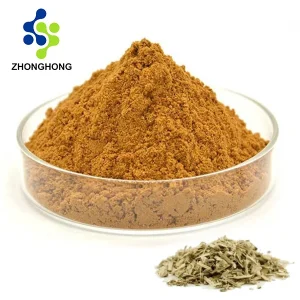
| Kiwi extract | Grade and marker to be agreed | Species, vitamin C/actinidin target; allergen assessment | Flavor, color, heat sensitivity |
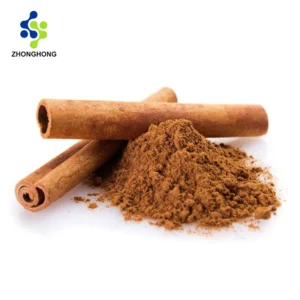
| Cassia bark extract | Marker-specific grade review | Species, cinnamaldehyde or polyphenols, coumarin | Aroma, matrix compatibility |
| Anthocyanins | Source-specific grade review | Individual/total anthocyanin assay, color strength | pH, light, oxidation |
| Monk fruit / steviol glycosides | Mogroside V / Reb A; separate assays | Glycoside composition and regulatory use | Sweetness curve, aftertaste |
| Citric acid / glycerin | Listed ≥99.5% targets; separate materials | Chemical form, food grade, EG/DEG for glycerin as relevant | Acidity / humectancy; distinct functions |
Do not substitute total polysaccharides for β-glucans, HPLC purity for color strength, or a cosmetic/USP grade for documented suitability in a particular food use.
A high-assay powder is not automatically the best commercial grade. Select the matrix and process, then qualify the ingredient.
Agree pH, inclusion concentration, water quality, pasteurization schedule and clarity specification. Assess turbidity and sediment after storage.
Evaluate interactions with proteins, salts, fats and stabilizers. Define viscosity and phase separation acceptance.
Review gel system, pH, water activity, solids, addition temperature and active recovery after processing.
Compare water binding, texture, taste, color and processing temperature; assess moisture migration and shelf-life.
Specify particle size, bulk density, moisture uptake and dispersibility under the intended reconstitution conditions.
Use the actual formula to assess sweetness timing, bitterness, hue, light exposure and packaging; confirm permitted uses.
The grade is qualified in the intended matrix. A successful water-only bench test does not prove shelf-life stability in a commercial drink.
Specify measurable acceptance criteria before purchasing pilot or commercial quantities.
| Problem | What to measure | Buyer decision |
|---|---|---|
| Sediment or haze | Concentration, pH, turbidity, particle size, storage time and temperature | Compare soluble versus dispersible grades and evaluate in the actual beverage |
| Heat-related loss | Time/temperature profile; marker assay before and after processing | Calculate retained active mass and validate the process |
| Color fading | pH, light, oxygen, temperature, color strength or CIELAB values | Select source and packaging; establish acceptable color change |
| Bitterness or off-flavor | Sensory panel, active dose, sweetener profile and carrier | Screen grades and flavor compatibility before scale-up |
| Lumping or viscosity drift | Hydration time, water activity, moisture, rheology and particle distribution | Agree hydration procedure and batch acceptance limits |
Active recovery: compare the measured active mass after processing with the starting active mass, using the same analytical method and correcting for dilution or evaporation. Do not interpret concentration change alone as degradation.
For project-specific technical review, see Botanical Formulation Engineering.
A food-grade claim must be tied to the offered material, production site, intended use and destination.
| Qualification | Evidence to request |
|---|---|
| Identity & composition | Source, species or chemical identity, manufacturing route, all carriers and excipients |
| Batch assay | Current specification, signed COA, method, units and reporting basis |
| Food safety | Risk-based contaminants, microbiology, pesticides, residual solvents and relevant allergen information |
| Special requirements | Gluten method and actual lot result, non-GMO or certification evidence where applicable |
| Market status | Applicable food ingredient, additive, color, sweetener or novel-food status and permitted conditions of use |
| Commercial terms | Sample linkage, MOQ, actual packing, stock or production schedule, freight and agreed Incoterm |
Regulatory boundary: FDA facility registration is not approval of an ingredient or finished food. US food-additive/GRAS conditions and EU novel-food, additive and color requirements must be assessed individually. Supplement eligibility is not proof of ordinary-food eligibility.
Commercial packing is often 25 kg per drum where suitable. Samples, testing, lead time, MOQ and DDP availability are agreed by grade and destination.
No. Intended use, grade, destination and applicable ingredient or additive rules determine eligibility. A supplement-grade material is not automatically permitted in a conventional beverage.
A dissolved material forms a solution under defined conditions; dispersed particles may remain suspended or later settle. Test the actual concentration, pH, temperature and storage conditions.
No. They differ in source, structure and physical behavior. Specify a source-appropriate assay and intended functionality before comparing percentages.
Only if the offered grade and manufacturing conditions support the target use. Request full composition and compare physical behavior in the finished matrix.
Request the exact food-grade specification, test method, reporting limit and lot-specific result. Do not infer gluten-free status from the glucan assay.
This must be evaluated for the selected grade and formulation. Agree processing time, temperature and pH, then measure active recovery and physical stability.
Share the ingredient, grade, application, quantity, destination and required documents. The offered lot or production plan, sample charges, packaging and delivery terms are confirmed individually.
Share your ingredient, target grade, dosage form, quantity and destination. Include process conditions, permitted-use requirements, carrier restrictions and relevant acceptance tests.
Use the existing AIHerba RFQ for submission. Available documents, samples and commercial terms are reviewed for the selected grade.
External regulatory references explain the qualification framework; they do not establish authorization or certification for any particular shipment. Application illustrations do not represent measured product data.