
01 / AIHerba® · Our Factory · Company-operated manufacturing
Botanical Extract Manufacturing & GMP Production Facilities
Factory-direct ingredient supply, from botanical preparation and extraction to standardized bulk powders.
AIHerba®, the botanical ingredient brand of Shaanxi Zhonghong Investment Technology Co., Ltd., operates its own manufacturing facility in China. With botanical ingredient experience since 1997, we support B2B manufacturers sourcing standardized extracts, functional ingredients and application-specific powders for food, nutritional and cosmetic formulations.
For R&D & Formulation
Define the target marker, acceptable solvents, carrier composition and physical properties before selecting a processing route.
For Procurement & QA
Discuss production scheduling, manufacturing site, grade-specific records, sample approval and commercial supply.
02 / Raw material preparation
Raw Material Preparation & Processing
The extraction process begins with the identity and condition of the incoming material. Preparation is selected to suit the botanical species, plant part, initial moisture and intended extract composition.
Incoming material
Review species, plant part, origin, supplier lot and acceptance specification.
Identity · origin · lot number
Sorting & size reduction
Remove unsuitable material and select cleaning, milling or size reduction appropriate to the feedstock.
Feed size · moisture · foreign matter
Material readiness
Assess contamination risks, storage conditions and the need for pretreatment before processing.
Hygiene · storage · material release
Why feedstock matters
A change in source, harvest or plant part may affect marker concentration, color or extract yield. The agreed incoming material and finished-grade specifications guide the production plan.
03 / Extraction technologies
Botanical Extraction Technologies
Extraction is selected to recover the intended fraction while managing co-extracted constituents, solvent restrictions and downstream processing. Water and ethanol-based routes are central to botanical extract manufacturing; specialized routes are evaluated for the relevant ingredient.
| Processing route | Typical application | Parameters to evaluate |
|---|---|---|
| Aqueous extraction | Water-extractable constituents and selected polysaccharide-rich fractions | Temperature, time, water quality, extract concentration |
| Water–ethanol extraction | Selected phenolics, flavonoids and other standardized botanical fractions | Solvent composition, extraction cycles, residual solvents |
| Ultrasound-assisted extraction | Selected material-specific extraction projects | Energy input, temperature, yield and scale-up |
| Supercritical CO₂ / enzyme-assisted routes | Selected lipophilic fractions or enzyme-assisted projects | Route availability, selectivity, process inputs and finished composition |
Process selection is not a universal formula
Extraction conditions are selected for the target material. Confirm the actual route, site, solvent history and resulting specification for the proposed grade. Fermentation-derived and isolated actives may follow different manufacturing pathways.
04 / Separation & enrichment
Separation, Concentration & Purification
After extraction, the process may remove insoluble matter, concentrate the target fraction or refine its composition. Not every botanical extract requires high-purity isolation.
Solid–liquid separation
Clarification and suitable filtration help separate insoluble solids from the extract.
Filtration · clarity · solids
Vacuum concentration
Concentration under reduced pressure can lower solvent boiling temperature. Product stability and thermal exposure still require review.
Temperature · solids content · solvent recovery
Membrane filtration
Suitable membrane systems can separate selected components according to their transport and retention characteristics.
Membrane selection · fraction recovery
Chromatography & enrichment
Selected fractions can be enriched or purified using appropriate separation media; activated carbon may be evaluated for selected purification needs.
Marker profile · impurity limits · recovery
Define the purification endpoint
A higher marker assay does not automatically mean a better ingredient. Compare individual impurities, residual solvents, extract composition and the assay basis before changing the grade.
05 / Drying & powder engineering
Drying, Sieving & Powder Processing
Drying and finishing affect handling, moisture, bulk density, particle-size distribution and application performance. The selected drying method and any carrier should be part of the grade description.
| Route | Common purpose | Acceptance criteria to agree |
|---|---|---|
| Spray drying | Convert suitable liquid extracts into bulk powder | Moisture, carrier type and percentage, particle size, marker retention |
| Vacuum drying | Selected materials requiring reduced-pressure drying | Thermal exposure, moisture, physical appearance |
| Freeze drying | Selected sensitive materials where technically and commercially appropriate | Moisture, structure, recovery and cost |
| Milling / sieving / granulation | Adjust powder handling and size distribution where appropriate | Mesh or D10/D50/D90, bulk density, flow and dust |
Dispersibility is different from solubility
A powder may disperse or remain suspended without dissolving. Evaluate the selected grade in the intended liquid, at the actual concentration, pH, temperature and mixing conditions. Do not infer performance from a drying method alone.
06 / Standardization & custom processing
Standardized Extracts, Blending & Commercial Packing
Standardization connects the target ingredient specification to commercial manufacturing. The agreed composition, active-marker content and physical requirements determine which finishing and blending steps are appropriate.
Marker standardization
Agree assay range, analytical method and reporting basis. Declare carriers or other processing additions where used.
HPLC / GC / suitable assay · dry basis
Custom blending
Evaluate the formula, blend ratios and physical compatibility for the intended bulk premix. Blend uniformity requirements are agreed by project.
Formula ratios · uniformity · handling
Bulk packing
Select moisture and light protection according to the material. Typical bulk packing is 25 kg per drum; smaller formats can be discussed.
Net weight · liner · batch label
Sample approval before commercial production
Agree on the grade, sample acceptance criteria and any scale-up requirements. Manufacturing MOQ, lead time, packing and production slot are confirmed in the quotation.
07 / Manufacturing equipment & capacity
Production Equipment & Factory Capacity Planning
Our company-operated facility supports botanical extraction and downstream processing. Production feasibility is evaluated against the specific ingredient, manufacturing line and order volume.
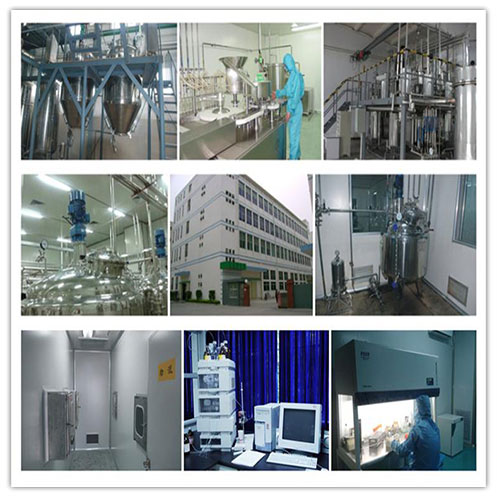
2,000–6,000 L
Extraction vessel sizes described for our production workshops. Nominal vessel volume is not finished-powder output or guaranteed annual capacity.
Commercial capacity review
Working volume, batch loading, extraction yield, drying throughput, cleaning and release scheduling determine the available production capacity for an individual grade.
| Production area | Equipment / processing category | Qualification focus |
|---|---|---|
| Extraction & concentration | Stainless-steel extraction vessels; concentration systems | Vessel working volume, material compatibility, solvent route |
| Purification | Filtration, membrane systems, chromatography where applicable | Applicable line, separation media, grade requirements |
| Drying & powder processing | Spray, vacuum or freeze drying where appropriate; sieving and milling | Throughput, particle size, moisture and cleaning |
| Blending & packaging | Bulk blending, finishing and packing equipment | Batch size, uniformity, line suitability and packaging |
Request a facility-specific capacity review
For recurring supply programs, provide the target specification, initial order quantity, annual demand and delivery schedule. We can review the applicable production line and commercial feasibility before confirming supply terms.
08 / Manufacturing quality
Manufacturing Hygiene, Batch Control & Traceability
Manufacturing quality depends on the control of materials, equipment, process conditions and release records. For supplier qualification, assess the actual site and the applicable GMP or food-safety certification scope for the selected product.
Production hygiene
Review personnel hygiene, cleaning, line clearance and cross-contact controls appropriate to the manufacturing area.
In-process controls
Agree relevant monitoring points such as extraction conditions, concentration, drying moisture and finished powder characteristics.
Batch documentation
Review lot identifiers, processing records, relevant equipment logs and the connection between release records and packing labels.
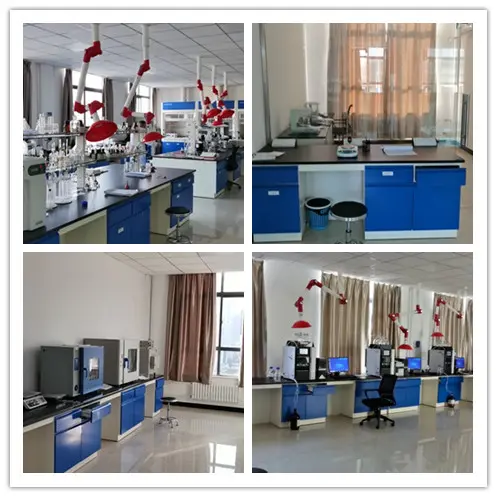
Method-specific quality verification
HPLC or GC can quantify suitable markers; ICP-MS is used for specified elemental impurities; microbiological enumeration and pathogen tests require their own suitable methods. Moisture and particle size also require independent, appropriate procedures.
Request the relevant batch COA, product specification, available test documentation and applicable site certificates. Certification and testing scope should match the actual grade and intended market.
09 / Manufacturing project & bulk procurement
Discuss Your Manufacturing Project & Bulk Supply
Send your ingredient requirements before fixing a commercial order. Our technical and procurement teams can review the proposed grade, manufacturing route, qualification documentation and commercial supply terms.
Technical requirements
Ingredient identity, target assay, allowed solvents, carrier restrictions, particle size and intended application.
Commercial requirements
Sample or pilot quantity, bulk demand, delivery schedule, destination and preferred Incoterm.
QA requirements
COA, specification, relevant certificates, supplier questionnaire and any specific testing limits.
Factory & manufacturing FAQ
Do you operate your own production facility?
Yes. AIHerba is the ingredient brand of Shaanxi Zhonghong Investment Technology Co., Ltd., which operates its own manufacturing facility. For a specific ingredient, we can discuss the actual manufacturing site and the processing stages relevant to your order.
Can you supply a specific extraction solvent or carrier-free grade?
Discuss the required extraction route, permitted solvents, carrier restrictions and target assay with our technical team. Feasibility depends on the ingredient and grade.
What is your MOQ and production lead time?
MOQ, sample availability and lead time depend on the selected grade, inventory, production requirements and packing. We confirm these commercial terms in the quotation.
Can our QA team review factory documents or arrange a visit?
Please share the required certification scope, questionnaire or audit agenda. Available documents and any visit arrangements can be reviewed according to the facility, project and confidentiality requirements.
References
- 21 CFR Part 117 — Human food CGMP and preventive controls
- FDA — Dietary supplement CGMP small entity compliance guide
These references explain relevant regulatory frameworks. Applicability depends on the product, manufacturing activity and destination market; citation does not establish certification or regulatory approval.
Documentation, testing, samples and DDP options depend on the selected grade and destination.