
1. Camptothecin Bulk Supplier & GMP API Manufacturer | High-Purity Camptothecin for Pharmaceutical R&D
Camptothecin is a naturally derived alkaloid widely used as a pharmaceutical R&D intermediate and oncology research compound.
AIHerba® is a GMP-certified Camptothecin supplier and API manufacturer, providing high-purity Camptothecin bulk material for global pharmaceutical companies, research institutes, and contract manufacturers.
Our Camptothecin is produced under strict GMP conditions, with full COA, MSDS, and batch traceability, ensuring consistent quality for formulation development, clinical research, and regulated supply chains. We support bulk orders, flexible MOQ, sample testing, and worldwide export, meeting the sourcing requirements of professional B2B buyers.
As a direct manufacturer, we offer stable supply, technical documentation, and procurement support tailored for long-term partnerships.
👉 Request bulk quotation, technical specifications, or COA directly from our factory team.
2. What Is Camptothecin?
What Is Camptothecin?
Camptothecin is a plant-derived quinoline alkaloid originally isolated from Camptotheca acuminata. It is primarily used as a pharmaceutical research compound and as a key intermediate for semi-synthetic anticancer APIs.
Key Benefits
-
High purity suitable for pharmaceutical R&D
-
GMP-controlled production and documentation
-
Stable physicochemical properties for formulation research
Applications
-
Pharmaceutical research & development
-
Oncology research compound development
-
API intermediate synthesis
Typical Specification
-
Purity: ≥98% (HPLC)
-
Grade: Pharmaceutical / R&D Grade
Safety Overview
-
For industrial, laboratory, and research use only
-
Not intended for direct consumer use
Supplier / Manufacturer
Produced and supplied by AIHerba®, a GMP-certified manufacturer specializing in botanical-derived active compounds.
3. Detailed Technical Specifications
| Parameter | Specification |
|---|---|
| Product Name | Camptothecin |
| CAS Number | 7689-03-4 |
| Molecular Formula | C20H16N2O4 |
| Molecular Weight | 348.35 |
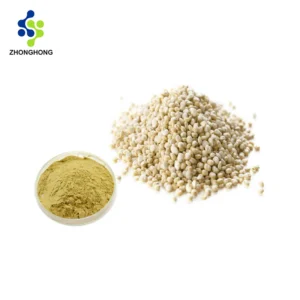
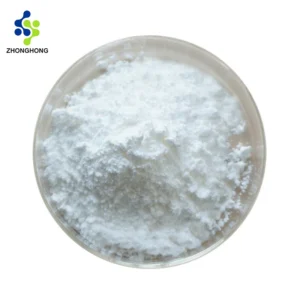
| Appearance | Yellow to light yellow crystalline powder |
| Purity | ≥98% (HPLC) |
| Solubility | Slightly soluble in water |
| Grade | GMP / Pharmaceutical R&D |
| Packaging | Double PE bags, fiber drum |
4. Product Source & Raw Material Origin
Camptothecin is extracted from Camptotheca acuminata, sourced through controlled agricultural supply chains. Raw materials are screened for identity, pesticide residues, and heavy metals prior to extraction to ensure compliance with international quality standards.
5. Mechanism of Action & Functional Properties
(Non-medical, non-therapeutic description)
Camptothecin functions as a topoisomerase I interaction compound, making it a critical reference material and intermediate in pharmaceutical research. Its defined molecular structure and activity profile support its use in oncology-related compound development and mechanistic studies.
6. Application-Relevant Benefits (Regulatory-Safe)
-
Consistent purity supporting reproducible R&D results
-
Suitable for regulated pharmaceutical development workflows
-
Comprehensive documentation for audit and compliance review
7. Usage Guidelines & Formulation Recommendations
Camptothecin is supplied for industrial and laboratory research use.
Recommended usage levels depend on specific formulation objectives and should be determined by qualified professionals. AIHerba provides technical support for formulation compatibility and stability assessment upon request.
8. Traditional & Modern Industrial Applications
-
Traditional botanical alkaloid research
-
Modern pharmaceutical R&D intermediate
-
Oncology compound screening and synthesis
9. COA & Quality Control Specifications
Pesticide Residue Testing
| Item | Limit | Test Method |
|---|---|---|
| Organophosphates | ≤0.1 ppm | GC-MS |
| Organochlorines | ≤0.05 ppm | GC-MS |
| Pyrethroids | ≤0.05 ppm | GC-MS |
Heavy Metals
| Item | Limit | Test Method |
|---|---|---|
| Lead (Pb) | ≤1.0 ppm | ICP-MS |
| Arsenic (As) | ≤1.0 ppm | ICP-MS |
| Cadmium (Cd) | ≤0.5 ppm | ICP-MS |
| Mercury (Hg) | ≤0.1 ppm | ICP-MS |
Microbiological Specifications
| Item | Limit | Test Method |
|---|---|---|
| Total Plate Count | ≤1,000 CFU/g | USP <61> |
| Yeast & Mold | ≤100 CFU/g | USP <61> |
| E. coli | Negative | USP <62> |
| Salmonella | Negative | USP <62> |
10. Manufacturing Process & Production Flow
-
Raw material sourcing & identification
-
Solvent extraction under controlled conditions
-
Purification and crystallization
-
In-process quality control
-
Final testing (HPLC, contaminants)
-
Packaging under GMP environment
11. Storage, Shelf Life & Packaging
-
Storage: Cool, dry, light-protected conditions
-
Shelf Life: 24 months
-
Packaging: Sealed double PE bags within fiber drums
12. MOQ, Sample Policy & Global Shipping
-
MOQ: Flexible, based on project scale
-
Samples: Available for qualified B2B customers
-
Shipping: Worldwide export with full documentation
13. Clinical Data & Scientific Research
(Reference only, no medical claims)
Camptothecin has been widely referenced in peer-reviewed pharmaceutical research as a foundational compound for semi-synthetic derivatives. Relevant publications are available via PubMed and NIH databases.
14. Applicable Industries
-
Pharmaceutical manufacturing
-
Contract research organizations (CROs)
-
Biotechnology R&D
-
API development companies
15. Industry Application Scenarios
Scenario 1:
A pharmaceutical company sourcing Camptothecin bulk material for derivative API development.
Scenario 2:
An oncology research institute requiring high-purity Camptothecin with GMP documentation.
Scenario 3:
An OEM/CDMO partner integrating Camptothecin as a pharmaceutical R&D intermediate for global clients.
16. Supplier Comparison & Procurement Guide
When selecting a Camptothecin supplier, B2B buyers should evaluate:
-
GMP certification status
-
Batch-to-batch consistency
-
Availability of COA & MSDS
-
Export experience and regulatory support
AIHerba offers direct factory supply, reducing procurement risk and ensuring long-term availability.
17. FAQ for B2B Buyers
Q1: Is your Camptothecin GMP certified?
Yes, produced in a GMP-certified facility.
Q2: Can you provide COA and MSDS?
Yes, full documentation is available.
Q3: What is your MOQ?
Flexible depending on application.
Q4: Do you support global export?
Yes, with compliant shipping documents.
Q5: Is this suitable for pharmaceutical R&D?
Yes, designed for professional research and development.
Q6: Can samples be provided?
Yes, for qualified buyers.
19. References & Regulatory Sources
-
PubMed (NIH)
-
FDA Botanical Drug Development Guidance
-
USP General Chapters
-
WHO Quality Control Methods for Herbal Materials
🏭 Manufacturer & Quality Assurance
Manufactured by AIHerba® (Shaanxi Zhonghong Investment Technology Co., Ltd.),
a GMP-certified manufacturer specializing in high-purity botanical extracts
for dietary supplements, cosmetics, and pharmaceutical applications.
✔ GMP-certified production facility
✔ Full COA & technical specifications available
✔ Batch traceability & strict quality control
✔ Bulk supply & OEM/ODM services for global B2B buyers
📧 sales@aiherba.com
| info@aiherba.com
| liaodaohai@gmail.com
🌐 www.aiherba.com
If you are looking for a bulk supplier / OEM manufacturer of Camptothecin, contact us for specifications, COA, and pricing.