01 / AIHERBA® · SPORTS NUTRITION APPLICATIONS
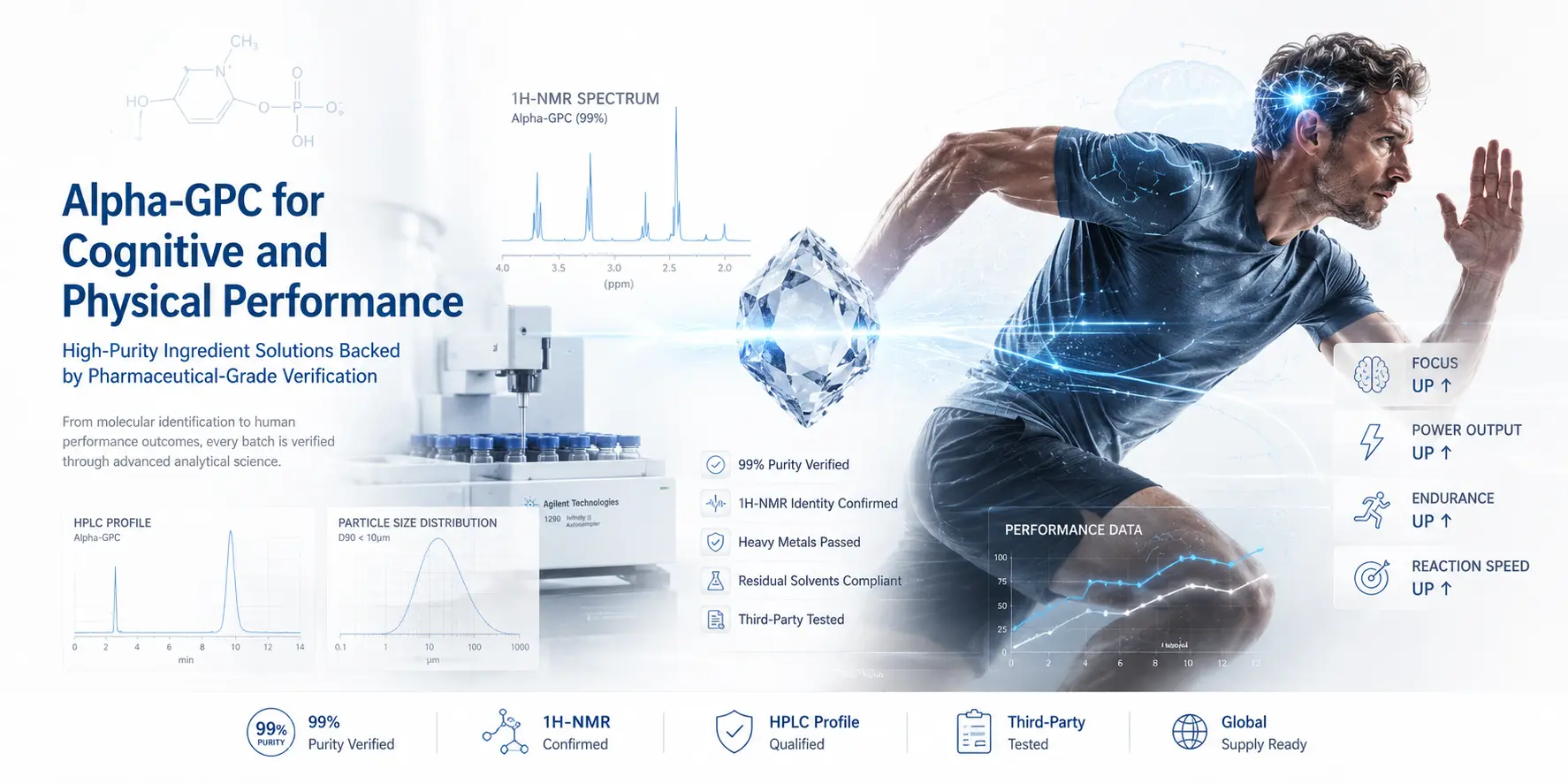
Alpha-GPC sports nutrition concept banner with a runner and analytical graphics
Illustrative Alpha-GPC concept graphic. Product-specific assay, analytical results and performance claims require separate supporting evidence.

Sports Nutrition Ingredients for Performance Formulation

Choose the right ingredient, grade and delivery format before scaling a sports nutrition formula.

AIHerba®, a brand of Shaanxi Zhonghong Investment Technology Co., Ltd., supports professional formulation teams evaluating amino acids, choline-source materials, standardized botanical extracts and specialty functional ingredients. This guide connects published research to practical selection, compatibility and testing decisions for pre-workout powders, capsules, gummies and ready-to-drink (RTD) products.

Begin with the target use and evidence, then define the active amount, material composition, processing conditions and acceptance criteria. A technically suitable material must also meet the intended market's requirements.

R&D / Formulation

Evaluate ingredient identity, physical form, process compatibility and a practical pilot test plan.
QA / Procurement

Confirm the selected specification and batch evidence; use our separate supply page for commercial terms.

02 / FORMULATION PATHWAYS

Six Sports Nutrition Formulation Pathways

Start from the product concept, rather than combining ingredients solely because they are popular. These are development pathways, not pre-validated formulas or consumer dosing recommendations.

Pre-workout & focus

Alpha-GPC and L-theanine are candidates for focus-oriented concepts. Define the intended cognitive endpoint and distinguish acute effects from longer-term use.

High-intensity exercise

Beta-alanine is studied in relation to muscle carnosine and repeated high-intensity exercise. Do not present it as an instant stimulant.

Cellular energy

CoQ10 is a lipophilic ingredient; its physiological role is not proof of an athletic performance benefit. Select the delivery system first.

Endurance-oriented botanicals

Ginseng and Rhodiola extracts need named marker profiles and documented botanical identity. Evidence depends on the studied preparation.

Recovery & active aging research

Urolithin A and ergothioneine are specialty research candidates. Separate muscle-function research from evidence for competitive athletes.

Custom powder systems

Match particle properties, moisture sensitivity and blend uniformity to the filling process. Define pilot acceptance criteria before scale-up.

03 / GRADE SELECTION

Ingredient Selection & Technical Compatibility

The same active name can represent different materials. Select the grade by assay basis, carrier system, origin, solid form and actual process conditions, not the highest advertised percentage.

Grade selection matrix — public catalog references, not confirmed stock
IngredientPublished grade referenceCritical R&D checksCandidate format
Alpha-GPC →50% granular / 99% powderCarrier, moisture sorption, bulk density and assay basisCapsules / dry powders
Beta-Alanine →≥99% HPLC listedSynthetic-grade identity, assay, particle size and sensory toleranceDry powders / capsules
L-Theanine →≥99% HPLC; fermentation-derived listingL-isomer identity, chiral test, as-supplied potency, pH and heat exposurePowder / beverage evaluation
CoQ10 →98.0–101.0% USP assay range, anhydrous basisLipophilic crystalline form, dispersion, light and oxidation controlsOil-compatible or engineered delivery
Ginseng →≥10% total ginsenosides catalog targetSpecies, marker panel, solvent, DER and carrierCapsule / powder evaluation
Salidroside →3% / 5% HPLC listedRhodiola identity, salidroside and other relevant markers; origin and trade documentsBotanical blends
Urolithin A →99% product listingGrade, particle size, solid form, impurities and market accessSpecialty R&D; not a universal sports claim
Ergothioneine →High-purity fermentation-derived listingConfirm assay on current TDS and COA; published page has different purity descriptionsSpecialty R&D; evaluate applicable use
Alpha-GPC grade comparison: 50% and 99% materials require different ingredient weights for the same target active content. A granular grade may improve handling, but moisture resistance must be measured. Read the existing Alpha-GPC formulation guide →
Illustrative material balance (not a suggested serving):
Material mass = target active mass ÷ as-supplied assay fraction.
For a hypothetical 100 g active target: 200 g at 50% or about 101.01 g at 99%. If the assay is reported on a dry basis, convert it using the method-appropriate water/solvent correction before calculating the weigh-in.
04 / RESEARCH & EVIDENCE

Pre-Workout, Endurance & Recovery: What the Research Supports

Evidence is organized by study design, population and measured outcome. Mechanistic plausibility, analytical purity and a published human study are different kinds of evidence. Do not extrapolate a study to an untested grade, combination or finished product.

Beta-alanine: repeated high-intensity work

A meta-analysis found a small overall benefit, with outcomes depending on exercise duration and test type. Evidence for exercise capacity was stronger than for some performance measures. This does not establish acute pre-workout efficacy.[1]

Alpha-GPC: early strength research

A small short-term crossover trial in 13 young men investigated isometric force. Its findings are exploratory; neither universal strength improvements nor equivalence of commercial grades is established.[2]

L-theanine: attention-oriented concepts

A review of randomized trials reported possible benefits for selected attention and mood measures, including use with caffeine, with uncertainty in several outcomes. Cognitive results are not proof of athletic performance.[3]

CoQ10: energy-related research

A systematic review found blood CoQ10 concentrations increased, but exercise performance effects were limited and inconsistent. Select the formulation on physical compatibility rather than an assumed VO2 max benefit.[4]

Rhodiola & ginseng: preparation matters

Rhodiola endurance research is promising but heterogeneous. Ginseng findings vary by preparation and outcome. Match species and marker profile to the evidence; a salidroside percentage alone cannot establish clinical equivalence.[5][6]

Urolithin A: population matters

A trial in older adults examined muscle endurance and mitochondrial health. Selected outcomes improved, but it is not evidence for all athlete populations, nor for every commercial solid form or blend. Ergothioneine remains an exploratory candidate here.[7]

These summaries are for professional development review. No published study is presented as an AIHerba product trial or a basis for automatic health, athletic or regulatory claims.

05 / DOSAGE FORM ENGINEERING

Capsule, Powder, Gummy & RTD Engineering

A formulation that passes a powder COA can still fail on a filling line or in a finished beverage. Agree on the format-specific test method before selecting the material.

Capsules / tablets

Compare bulk and tapped density, particle distribution, moisture and flow. Determine capsule fill volume or compression feasibility with the actual blend.

Pilot endpoints: Fill-weight variation, disintegration where applicable, assay uniformity, caking.

Powders / sachets

Check component particle-size mismatch, segregation and blend sampling. Choose a moisture-barrier pack according to measured sorption and stability.

Pilot endpoints: Blend homogeneity, flow through hopper, reconstitution and sensory checks.

Gummies

Evaluate water activity, processing heat, pH, gel strength and active recovery. Hygroscopic ingredients can alter texture; test the actual matrix.

Pilot endpoints: Active assay after processing, texture, water activity and storage behavior.

RTD / beverage

Set target concentration and water chemistry. Compare dissolved versus dispersed fraction; lipophilic CoQ10 needs an appropriate delivery approach.

Pilot endpoints: Turbidity, sediment, assay after heat exposure, flavor and shelf-life checks.

06 / PHYSICAL & CHEMICAL PERFORMANCE

Solubility, Hygroscopicity & Stability: Troubleshooting Matrix

Solubility is not dispersibility. Moisture content is not moisture uptake. An initial assay is not a shelf-life study. Separate these parameters so that a failed pilot produces an actionable specification change.

Pilot troubleshooting guide
Observed problemLikely variables to investigateNext development step
Clumping / stickingMoisture uptake, carrier, storage RH, temperatureCompare moisture sorption and flow under the planned exposure; evaluate packaging and humidity control.
Inconsistent fill weightBulk density, tapped density, particle size, electrostatic effectsCheck feeder behavior and sampling across the run; compare grades at the same active content.
Sediment in RTDTrue solubility, pH, temperature, concentration, particle sizeTest at intended use concentration; record mixing, time, turbidity and sediment under defined conditions.
Assay loss after processingHeat, pH, oxidation, light and analytical interferenceCompare pre/post process results using a suitable stability-indicating assay; evaluate packaging and storage.
Segregation in premixParticle density/size mismatch and handling sequenceEstablish blending order, sampling locations, transport simulation and agreed uniformity criteria.

Quantify powder flow

Hausner ratio = tapped density ÷ bulk density. Carr index (%) = 100 × (tapped − bulk density) ÷ tapped density. These screening metrics depend on method and do not replace a filling trial.

Define stability conditions

Set relevant time points, temperature, relative humidity, package and acceptance criteria. Report measured assay, moisture, appearance or physical properties; avoid promising zero degradation.

Move from bench to pilot

Confirm mixing order, equipment geometry, shear, fill speed and environmental conditions. Scale-up should test the same acceptance criteria used at bench scale. A changed carrier or physical grade may require a new verification.

Explore formulation engineering →
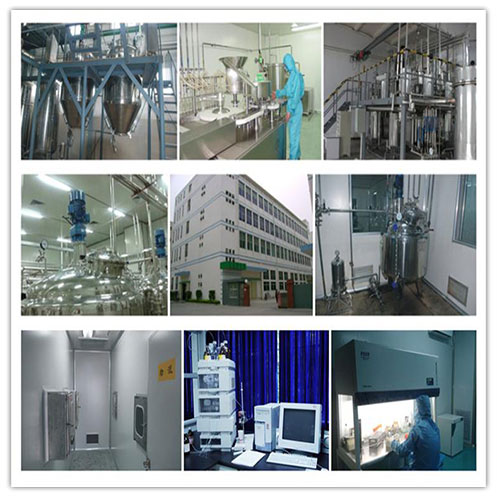
Manufacturing and processing equipment collage in AIHerba media library
Manufacturing reference image; specific equipment and project feasibility are confirmed separately.
07 / ANALYTICAL EVIDENCE & SPORTS-SAFETY REVIEW

Analytical Evidence and Anti-Doping Risk Management

Define a product-specific test plan for the intended ingredient and destination. A COA establishes only the tested attributes for its identified lot. It does not establish sports certification or clinical efficacy.

Risk-based evidence matrix
AttributeSuitable method or evidenceWhy it matters
Identity / assayHPLC, GC, IR, LC-MS or other validated suitable methodCorrect analyte and quantitative basis; use a chiral method when needed.
Physical characteristicsD10/D50/D90, bulk/tapped density, LOD or Karl Fischer as appropriateMaterial handling, moisture and particle compatibility.
Residual solventsHeadspace GC or other suitable method; product-specific limitsSelect solvents and limits from process and applicable requirements.
ContaminantsICP-MS, LC-MS/MS, GC-MS/MS, microbiology as appropriateRisk-based assessment of elemental, pesticide or microbial hazards.
Sports cross-contactFacility risk review, supplier declarations, targeted screening where agreedScope, analytes, LOQ and lot linkage determine what a result can support.
Anti-doping boundary: WADA publishes the Prohibited List and updates it regularly [8]. It does not approve raw materials. NSF Certified for Sport is an independent certification program with testing and other verification requirements [9]. Neither a standard COA nor absence of one prohibited analyte establishes certification or absence of all risks. Verify the current list, exact product, certification listing and buyer-required scope.

For Rhodiola materials, confirm species and origin and evaluate applicable CITES, import and export documentation before commercial use. For specialty actives, assess market-specific ingredient legality and any intellectual-property constraints independently of assay or identity.

08 / FORMULATION FAQ

Technical Questions from Sports Nutrition Developers

Should I select Alpha-GPC 50% or 99% for a powder?

Compare active-equivalent weigh-in, carrier composition, moisture uptake, flow and final serving mass. Test the selected grade in your blend rather than assuming that either is always better.

Is beta-alanine an immediate pre-workout stimulant?

No. Its research rationale concerns muscle carnosine and repeated supplementation, not an immediate stimulant effect. Formulation and label decisions require a separate evidence and safety review.

Can crystalline CoQ10 make a clear RTD?

Do not assume so. CoQ10 is lipophilic. A suitable dispersion or solubilization system and matrix-specific tests may be needed; customized grades require feasibility confirmation.

Does fermentation-derived L-theanine guarantee chiral purity?

No. Source declaration and chiral identity are different requirements. Request process documentation and suitable analytical evidence for the offered grade.

Does a high marker assay make a botanical equivalent to a trial extract?

No. Species, plant part, extraction route, full marker profile, carrier and the studied preparation also matter.

Can a standard COA establish WADA or NSF certification?

No. Review the current WADA list, independent certification scope and exact product listing. Agree targeted screening separately when required.

What should a formulation brief include?

Define ingredient, active target, carrier restrictions, dosage form, process conditions, target market, pilot quantity, problem observed and acceptance criteria. Include relevant test and packaging requirements.

09 / TECHNICAL SUPPORT & REFERENCES

Request a Sports Nutrition Formulation Review

Share your formulation challenge and the intended product format. We can discuss grade selection, available analytical documentation and the scope of a sample or pilot evaluation.

R&D technical brief

Ingredient • active target • dosage form • pH / temperature • observed problem • acceptance criteria

Commercial handoff

Once the grade and technical criteria are agreed, confirm MOQ, sample options, quantity, destination and quotation on our supplier page.

Related technical resources

Scientific and regulatory references

  1. Beta-alanine: exercise capacity and performance meta-analysis (2017) ↗
  2. Alpha-GPC: short-term isometric strength crossover trial (2015) ↗
  3. L-theanine and caffeine: cognition, sleep and mood review (2025) ↗
  4. CoQ10: exercise performance systematic review (2025/2026) ↗
  5. Rhodiola: endurance systematic review and meta-analysis (2025) ↗
  6. Ginseng: exercise and fatigue meta-analysis (2016) ↗
  7. Urolithin A: older adult muscle endurance trial (2022) ↗
  8. WADA: current Prohibited List ↗
  9. NSF: Certified for Sport program ↗

References are selected external research and regulatory resources, not AIHerba product-specific clinical evidence. Ingredient suitability, current grade availability, manufacturing route, regulatory status, testing scope and commercial supply are assessed per project. For professional B2B use.

Scroll to Top

Request Factory-Direct Quote & Lab Samples

Request Bulk Pricing & Batch COA