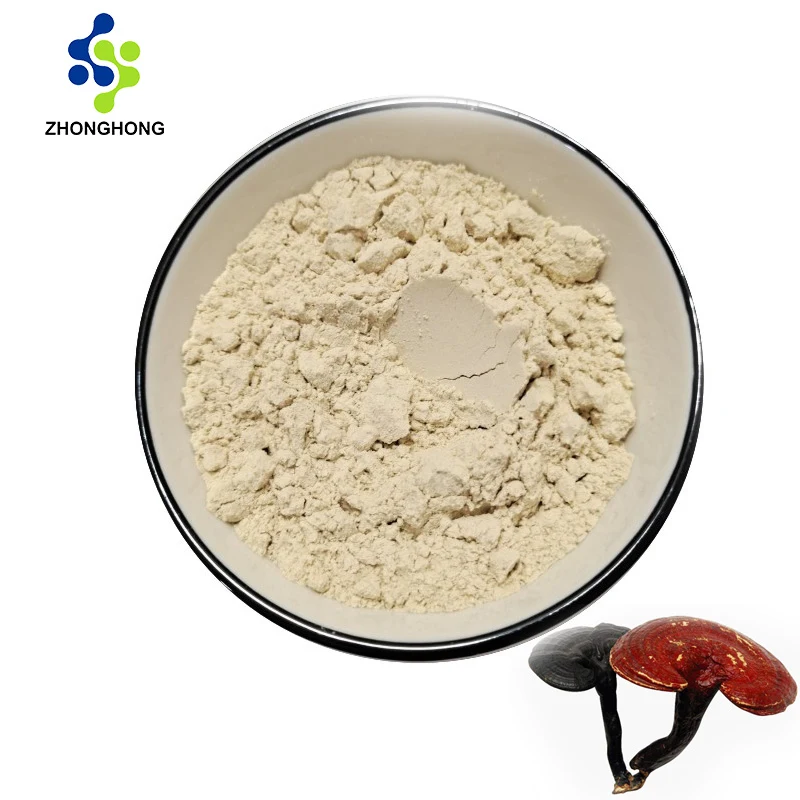
AIHerba® supplies Reishi mushroom fruiting-body extract for nutraceutical formulation, functional-food development and bulk ingredient sourcing. Our technical qualification separates fungal β-glucan enzymatic assay results, total polysaccharide measurements and triterpene / ganoderic-acid analysis, instead of treating them as interchangeable purity values.
For projects specifying 20% β-glucans or another target grade, request an offered-lot COA, the exact analytical method, botanical identity and a full composition declaration before approval. No single assay percentage is represented here as a verified result for all shipments.
β-Glucans: Enzymatic assay
Ganoderic acids: HPLC, where specified
01B2B Reishi Extract Supply Overview
AIHerba® supports qualified procurement of standardized Reishi mushroom extracts in commercial quantities. This page is the general Reishi fruiting-body extract sourcing dossier: use it to compare carbohydrate-focused grades, sourcing identity, manufacturing routes and quality records before issuing an RFQ.
Buyers who specifically require Ganoderic Acids HPLC, total triterpenes or Reishi spore powder should use the linked specialist product dossiers rather than assuming that all Reishi extracts share one active-marker specification.
QA
Choose a specification and the test method before comparing price or lead time.
R&D
Assess dispersibility, taste, carrier load and real finished-formula stability.
BUY
Request MOQ, price tiers, packing, lead time and destination-specific documents.
02Reishi Species Identity and Taxonomic Qualification
Reishi or Lingzhi is a trade name applied to multiple members of the Ganoderma complex. Commercial materials commonly use the name Ganoderma lucidum, although East Asian Ganoderma lingzhi and related species are scientifically distinguished. For a controlled specification, request the accepted binomial, strain/cultivation records, part identification and authentication method for the supplied lot.
Species identity should be based on documented origin and a suitable authentication approach. HPLC triterpene profiles can support differentiation, but an assay for β-glucans alone does not prove whether the material originated from one particular Ganoderma species.
Do not populate the ACF botanical field with an unverified species name merely to fill a template.
03Fruiting Body vs Mycelium vs Spore Material
| Material | Identity requirement | Commercial distinction |
|---|---|---|
| Fruiting-body extract | Fruiting-body source; cultivation and part records | Focus of this general Reishi product page |
| Mycelium / myceliated grain | Culture strain, growth medium, separation of biomass and grain | May alter starch and α-glucan profile; do not label as fruiting body |
| Spore powder / spore extract | Spores, wall-breaking process and extraction route | Separate Reishi spore products and COA |
AIHerba does not treat fruiting body, cultured mycelium and spores as interchangeable raw materials. Where a formulation requires “100% fruiting body”, request a source declaration and documentation of any processing aids or added fillers.
04Analytical Qualification Matrix: Three Marker Families
βG
Use an appropriate yeast/mushroom enzymatic method; review α-glucan and matrix interference.
PS
A defined colorimetric assay reports method-dependent carbohydrate equivalents, not β-glucan content.
GA
Specify individual compounds and a validated HPLC method, or label total-triterpene estimates separately.
A 30% total-polysaccharide result, 20% β-glucan result and 5% triterpene result cannot be directly compared as “equivalent purity”. They may use different preparations, references, units and even different commercial grades.
05Fungal Beta-Glucan Enzymatic Assay: K-YBGL
For fungal β-glucan qualification, request the method name, version, sample pretreatment, dry/as-received reporting basis, replicate results and batch traceability. Megazyme by Neogen K-YBGL is designed for yeast/mushroom materials and calculates β-glucans from the corresponding glucan measurements. It is not a generic HPLC purity method.
| COA field | What the laboratory should report |
|---|---|
| Total glucan | Tested value and hydrolysis workflow |
| α-Glucan | Measured value, starch/glycogen treatment and relevant interference control |
| β-Glucan | Calculated value according to the stated method |
| Assay version | Kit / SOP revision and laboratory identity |
| Lot identity | Sample and tested commercial lot match |
Where a buyer requests 20% β-glucans, write “20% grade under qualification” until a matching offered-lot result and approved release specification are available.
06Alpha-Glucans, Grain Starch and Carrier Interference
High α-glucan may originate from starch-rich cultivation substrates, introduced fillers or the analytical matrix. An α-glucan result cannot by itself prove that a finished powder contains mycelium-on-grain, but it can trigger follow-up on ingredient composition and cultivation controls.
Request the full formula, whether carrier or maltodextrin is added, method suitability for the specific matrix and any corrective pretreatment. The buyer should avoid accepting “30% polysaccharides” as a substitute for independent α- and β-glucan results.
SRC
Cultivation and raw-material lot identification
MAT
Fillers, dextrins, starch and other added ingredients
MTH
Enzymatic assay version, reporting basis and limitations
07Total Polysaccharides: Colorimetric Assay Limitations
Total polysaccharides may be estimated by a phenol-sulfuric acid or other validated colorimetric method. The result depends on calibration reference (commonly glucose equivalents), preparation, interference management and calculation. Such values are not chemically identical to the fungal β-glucan fraction.
If a purchasing specification uses “10%”, “30%” or “50% total polysaccharides”, obtain the corresponding method and batch COA. Previous website claims across the 10–50% range are not presented as verified stock grades in this revision.
08Ganoderic Acids HPLC vs Total Triterpenes
Reishi contains structurally diverse triterpenes including ganoderic acids. A total-triterpene color reaction and a compound-specific HPLC assay answer different questions; do not label a UV total-triterpene percentage as “ganoderic acids HPLC”.
For buyers seeking defined ganoderic-acid markers, the specialist dossier should specify the exact analytes, reference standards, chromatographic conditions, identification criteria and reported units. The corresponding Reishi Ganoderic Acids product page is the appropriate downstream procurement entry.
| Purchase request | Qualification route |
|---|---|
| Reishi fruiting-body polysaccharide extract | This page: origin, total polysaccharides and fungal β-glucan methods |
| Reishi ganoderic acids extract | Dedicated ganoderic-acid page; compound-specific HPLC |
| Total triterpenes extract | Separate total-triterpene specification and method |
| Reishi spores | Dedicated spore raw-material product page |
09Choosing a Standardized Commercial Reishi Grade
Instead of offering a blanket “10%–50% polysaccharides / 2%–10% triterpenes” statement, AIHerba qualifies each grade against the intended analytical target, processing route and current batch. A 20% fungal β-glucan target used in purchasing discussions is a useful RFQ specification, but it is not a claim that all available product lots achieve 20%.
| Buyer qualification path | Key release evidence | Typical question |
|---|---|---|
| Polysaccharide-focused | Declared total-polysaccharide method + COA | Which colorimetric reference and sample basis? |
| β-Glucan-focused | K-YBGL or equivalent validated enzymatic results | Can you provide β- and α-glucans for the quoted lot? |
| Triterpene-focused | Defined total-triterpene method / HPLC marker data | Which specific triterpenes are included? |
| Carrier-free requirement | Signed quantitative composition declaration | Does the finished powder contain maltodextrin or other fillers? |
10Water vs Hydroalcoholic Extraction
Hot-water extraction is commonly selected for water-extractable mushroom polysaccharide fractions, while hydroalcoholic processing may target different small-molecule fractions. Combining or fractionating extracts changes the composition and should not be presented as one universally identical grade.
The source, extraction solvent, solvent quality, DER calculation, filtration and drying records must correspond to the quoted commercial powder. A process description alone does not prove an assay result. Water-extracted material may disperse or hydrate differently from alcohol-enriched triterpene material.
WTR
Polysaccharide-focused extraction with specific hydration profile.
ETOH
Potential enrichment of different soluble constituents; residual-solvent review required.
DRY
Final assay and dispersibility depend on the selected process and any added carriers.
11Carrier, Excipients and Full Composition Declaration
Before placing an order, obtain a finished-ingredient quantitative composition covering Reishi-derived solids and each added carrier or processing ingredient. A “10:1 extract” label does not by itself identify the percentage of active polysaccharides or prove absence of maltodextrin.
Compare carrier-free material, reconstituted extract powder and instantized / agglomerated grades separately. Allergen, GMO, irradiation and origin statements must apply to the selected manufacturing route and commercial lot.
| Composition element | QA question |
|---|---|
| Fruiting-body solids | Are source material and finished extract solids traceable? |
| Carrier(s) | Name and weight fraction for maltodextrin, gum or other additions |
| Solvents | Water / ethanol route; residual-solvent testing as applicable |
| DER | Native and commercial DER distinguished where needed |
| Additional processing | Agglomeration, granulation, encapsulation or spray drying declared |
12Solubility, Dispersibility, Color and Flavor
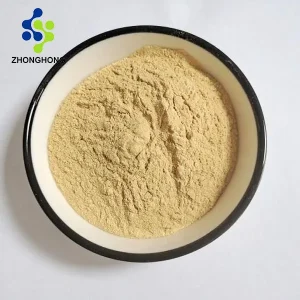
Reishi powder is typically brown with an earthy/bitter sensory profile, but appearance and behavior vary by raw material and process. Water dispersibility, true dissolution and solution clarity are different properties. Do not interpret “partially water-soluble” as an assurance of complete clarity in every beverage formula.
For capsule applications, evaluate particle-size distribution, flowability and bulk density. For beverages, study wetting time, sedimentation, filtration losses, thermal history, pH and flavor impact in the finished formula. Provide actual trial records rather than a universal 100% solubility claim.
13Application Engineering: Capsules, Powders and Beverages
| Application | R&D validation | Buyer decision |
|---|---|---|
| Capsules / tablets | Blend uniformity, flow, compaction, hygroscopicity | Lot assay and particle / bulk-density fit |
| Sachet / powder blends | Color, bitterness, segregation, reconstitution | Powder mixture and storage stability |
| Mushroom coffee / drinks | Wetting, turbidity, sedimentation, heat / pH | Formula-specific pilot trial required |
| Cosmetic development | Color, odor, compatibility, relevant INCI and safety review | Qualified cosmetic grade; not automatic |
No therapeutic dosage or disease claims are specified by this raw-material page. Application rates are to be established by the customer’s product development and regulatory teams.
14Batch COA and Analytical Dossier Checklist
A buyer should be able to connect every reported technical result to the specific commercial lot being quoted. A batch-specific COA is distinct from a generic TDS and from a laboratory method brochure.
| Evidence | Suggested documentation |
|---|---|
| Identification | Supplier/strain, part used, cultivation/traceability and identity tests |
| Assay | Method, numeric specification, actual lot result and reporting basis |
| Glucan panel | β-Glucan and α-glucan results with kit/SOP revision |
| Composition | Carrier statement and quantitative component list |
| Contaminants | Metals, microbial, pesticides / mycotoxins / solvent records as applicable |
| Transport / stability | Manufacture date, storage, shelf-life rationale, packing and retained sample |
15Heavy Metals, Microbiology and Other Contaminant Controls
Review Pb, Cd, As, Hg and microbiological criteria using the applicable destination-market requirements, consumption exposure and final-product use. Use measured COA values and the relevant laboratory method, not unverified hard-coded limits from the previous web page.
Where risk assessment indicates, include pesticide residues, mycotoxins, PAHs and residual solvents. For results below the analytical limit, the laboratory should disclose LOD/LOQ instead of reporting a literal zero. Independent ISO/IEC 17025 results can strengthen qualification when they actually exist for the specific sample.
16Manufacturing, Traceability and Supplier Qualification
AIHerba® coordinates manufacturing and sourcing qualification for Reishi extract projects. A manufacturing claim for a particular product should be supported by the actual production-site information, relevant quality-system certification and traceability records. Do not imply that every grade is produced in the same factory or covered by one certificate.
For recurring demand, ask for batch-to-batch assay history, change-control policy, raw-material origin, process description, corrective action records and sample retention. Factory audit documents should be released as authorized.
17Regulatory, Labeling and Claim Qualification
The regulatory treatment of Reishi extracts depends on source species, form, processing, finished product, market and intended use. Botanical identity and the historical use of “Reishi” do not automatically establish compliance for every concentrate or spore fraction.
For dietary supplements, food and cosmetic formulations, the customer’s regulatory team should evaluate permitted uses, label claims, contaminants and documentation for the specific market. This page does not assert that a particular grade is universally GRAS, Novel Food-approved, drug-approved or certified organic.
18Bulk Packaging, Sample Policy, MOQ and Delivery
Commercial quotations should state the selected grade, batch number, order size, packing format, lead time, Incoterm and destination. AIHerba commonly handles industrial packed extract orders, but pack size and release schedule are dependent on the specific offered material.
Typical buyers request evaluation quantities before production. Sample costs, freight and whether the evaluated sample matches the first commercial lot should be stated in the quotation. Do not rely on the previous page’s blanket “1 kg MOQ, free sample, 3–7 days” policy without current stock confirmation.
RFQ
State target β-glucans / polysaccharides / triterpenes and kilograms.
DOC
Request proposed lot and quality package.
LOG
Ask for freight routing, packing size and customs documentation.
19Procurement FAQ: Reishi Extract Quality and Wholesale Supply
Is Reishi extract the same as Reishi spore powder?
No. Fruiting-body extracts and spores are different raw materials and should have separate source records, processing descriptions and COAs.
Does “30% polysaccharides” mean 30% fungal beta-glucans?
No. Total polysaccharide colorimetric values and fungal β-glucan enzymatic values measure different analytical categories.
Can AIHerba supply a 20% beta-glucan grade?
A 20% β-glucan target can be evaluated through sourcing and batch qualification. Ask for the offered-lot K-YBGL results and the approved specification before placing an order.
How are beta-glucans tested?
A suitable yeast/mushroom enzymatic method such as Megazyme K-YBGL may be used. Request the method version, α-glucan data and the tested lot.
Are total triterpenes and ganoderic acids the same?
No. A total-triterpene estimate is not a substitute for an HPLC result for named ganoderic-acid compounds.
Is every grade completely water-soluble?
No. Solubility, dispersion, clarity and sedimentation depend on the ingredient grade and formulation conditions.
Is the product always organic and carrier-free?
Neither claim should be generalized across grades. Request the applicable certification and quantitative composition declaration.
What is the commercial MOQ and lead time?
These depend on the offered lot, packaging, production schedule and destination. Request a grade-specific quotation.
Can I receive a batch COA and sample?
AIHerba can review requests for an available-lot COA and evaluation sample, subject to current sample policy, lot availability and delivery arrangements.
20Scientific Sources, Topic Cluster and Final Procurement CTA
Independent analytical references provide method context and scientific support; they are not batch certificates for AIHerba commercial material. A product COA must come from the identified released lot.
- Megazyme / Neogen: β-Glucan Assay Kit (Yeast and Mushroom), K-YBGL
- Megazyme: starch-related matrix interference in β-glucan analysis
- NCI: Medicinal Mushrooms (PDQ), reishi taxonomy and research context
- PubMed: Ganoderma species identification in commercial Reishi products (PMID 30061872)
- PubMed: Ganoderma species and chemical identity (PMID 27044336)
Related procurement and technical dossiers:
Share your β-glucan or total-polysaccharide target, exact test method, carrier restrictions, expected volume and destination. AIHerba will review the appropriate offer and available technical dossier.
Documentation, testing, samples and DDP options depend on the selected grade and destination.