1. Organic Ginger Extract (USDA/EU Organic) Supplier & Manufacturer | GMP Facility | Bulk / Wholesale | Food & Cosmetic Grade (as specified)
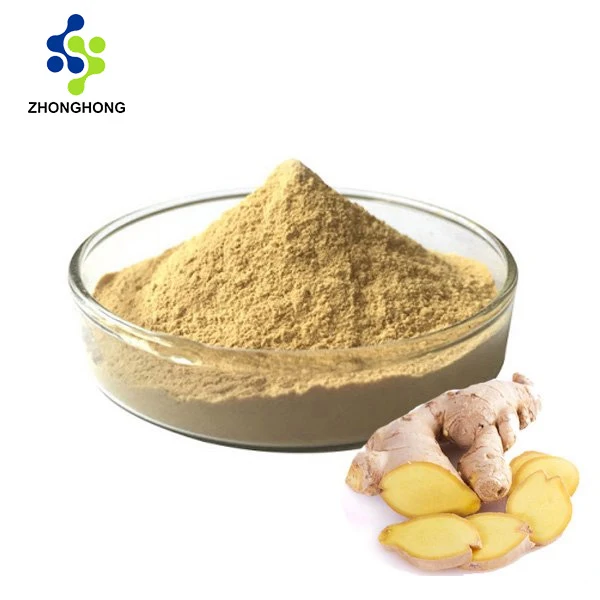
AIHerba® supplies organic ginger extract powder standardized to consistent gingerols content for global B2B buyers—ingredient importers, supplement factories, cosmetic labs, and brand owners running OEM/ODM programs. This is a procurement-ready raw material with batch COA, traceability, and documentation support for QA and regulatory teams. Standard grades include 5% gingerols and 10% gingerols (HPLC), with optional customization for particle size, carriers, and packaging formats.
Request a quotation with your target spec, destination country, and annual volume to receive pricing, MOQ, lead time, and a documentation list (COA/TDS/SDS).
Quick Summary
- Ingredient name: Organic Ginger Extract (standardized to gingerols)
- CAS No: 84696-15-1 (commonly used for ginger extract in documentation; botanical extracts are multi-component mixtures)
- Main applications: Dietary supplements, functional foods/beverages, cosmetics (topical)
- Typical purity: Gingerols 5% or 10% by HPLC (as ordered)
- Suitable industries: Supplement manufacturers, OEM/ODM factories, nutraceutical brands, food & beverage formulators, cosmetic manufacturers
2. What Is Organic Ginger Extract?
Organic ginger extract is a concentrated botanical ingredient produced from certified organic Zingiber officinale rhizome. Unlike raw ginger powder, the extract can be standardized to a defined range of marker compounds—most commonly gingerols—to improve batch-to-batch consistency and purchasing predictability.
Benefits (Regulatory-Safe, Non-Medical)
- Consistent active marker control (gingerols) to support formulation repeatability
- Strong sensory profile typical of ginger-derived oleoresins
- Useful functional properties in food, supplement, and personal care formulations
Applications
- Dietary supplements: capsules, tablets, powders, sachets
- Functional foods & beverages: drink mixes, wellness shots, teas
- Cosmetics: botanical active in creams/lotions/cleansers (system-dependent)
Dosage / Specification (B2B Guidance)
- Standard grades: 5% gingerols (cost-effective) and 10% gingerols (higher potency)
- Selection depends on target marker per serving/unit, taste constraints, and cost structure
- We provide formulation-oriented guidance for dispersion/solubility based on your system
Ginger is widely used as a food ingredient and botanical. Safety and suitability depend on your finished product format, dosage, and local regulations. Refer to your market’s compliance requirements and request our SDS and batch COA for risk assessment. For consumer-facing claims, consult qualified regulatory professionals. (General background resources are available from NCCIH.) (NCCIH)
Supplier / Manufacturer
AIHerba® provides procurement support including specification confirmation, export documentation, and batch traceability for importers and factories operating under audited quality systems.
3. Detailed Technical Specifications
| Parameter | Specification (Typical) |
|---|---|
| Product name | Organic Ginger Extract Powder |
| Botanical name | Zingiber officinale Roscoe |
| Part used | Rhizome |
| Marker compound | Gingerols (HPLC) |
| Standard grades | 5% gingerols / 10% gingerols |
| Appearance | Fine powder |
| Color / odor | Characteristic (ginger-derived) |
| Particle size | 【e.g., 80 mesh】 (custom available) |
| Solvent system | 【e.g., ethanol/water】 (confirm per ordered spec) |
| Carrier | 【None / Maltodextrin optional】 (confirm per ordered spec) |
| Moisture (LOD) | 【e.g., ≤5.0%】 |
| Total ash | 【e.g., ≤5.0%】 |
| Microbiology | Conforms (see COA table) |
| Heavy metals | Conforms (ICP-MS; see COA table) (usp.org) |
| Pesticide residues | Multi-residue panel (LC-MS/MS + GC-MS/MS) per USP botanical testing approach (doi.usp.org) |
| Shelf life | 【24 months】 |
| Storage | Cool, dry, sealed; protect from light and moisture |
| Packaging | 【1 kg / 5 kg / 25 kg】 export cartons/drums |
4. Product Source & Raw Material Origin
Our raw material is derived from organic ginger rhizome with traceability controls designed for international trade: supplier qualification, incoming identity checks, and batch documentation retention. Ginger definition and identity references are consistent with recognized pharmacopeial descriptions of ginger rhizome. (doi.usp.org)
5. Mechanism of Action & Functional Properties (Non-Medical)
The functional profile of ginger extracts is commonly linked to ginger-derived phenolic compounds such as gingerols and shogaols. Thermal processing can shift the marker profile (e.g., gingerols converting toward shogaols), which is why standardized assays and controlled processing matter for industrial consistency. (American Chemical Society)
For procurement and QC, we treat these as measurable chemical markers rather than medical endpoints—verified by HPLC and documented on the COA.
6. Application-Relevant Benefits (Regulatory-Safe)
- Standardization value: Helps brands and factories maintain consistent label claims tied to marker content (gingerols %)
- Process predictability: Controlled particle size and optional carrier selection support manufacturing flow (blending, encapsulation, tableting)
- Documentation readiness: COA/TDS/SDS and traceability support supplier audits and customer QA reviews
7. Usage Guidelines & Formulation Recommendations
For dietary supplement manufacturing (capsule/tablet/powder):
- Choose 5% for general formulas where cost efficiency and taste management matter
- Choose 10% when you need a higher marker content per serving with lower inclusion rate
- Request particle size options if you have flowability requirements for automated lines
For beverages and functional foods:
- Solubility and taste are system-dependent; request guidance for dispersion and masking strategies
- Consider pilot sampling before scale-up to confirm sensory impact and stability
For cosmetics (topical):
- Compatibility depends on solvent phase and emulsification system
- Request SDS and recommended handling; conduct stability and compatibility testing in your base
8. Traditional & Modern Industrial Applications
Ginger has long-standing use as a food spice and botanical ingredient. Modern industry applies standardized ginger extracts in:
- Nutraceutical formulas (standardized marker-based purchasing)
- Functional foods and beverage concepts (flavor + botanical positioning)
- Personal care formulations using botanical actives (non-therapeutic positioning)
For traditional herbal context, the EMA herbal monograph is a commonly referenced regulatory-style source (note: it is not a marketing claim). (European Medicines Agency (EMA))
9. COA & Quality Control Specifications
9.1 Pesticide Residues
Testing typically uses multi-residue LC-MS/MS + GC-MS/MS workflows aligned with pharmacopeial approaches for botanicals. (doi.usp.org)
| Pesticide item | Limit (mg/kg) | Test method |
|---|---|---|
| Aldrin + Dieldrin | NMT 【0.05】 | GC-MS/MS (USP botanical approach) (ftp.uspbpep.com) |
| DDT (total) | NMT 【0.1】 | GC-MS/MS |
| Heptachlor | NMT 【0.05】 | GC-MS/MS |
| Chlordane (total) | NMT 【0.05】 | GC-MS/MS |
| Lindane (γ-BHC) | NMT 【0.1】 | GC-MS/MS |
| Chlorpyrifos (ethyl/methyl) | NMT 【0.05】 | GC-MS/MS / LC-MS/MS |
| Diazinon | NMT 【0.05】 | GC-MS/MS |
| Malathion | NMT 【0.1】 | GC-MS/MS |
| Cypermethrin | NMT 【0.1】 | GC-MS/MS |
| Deltamethrin | NMT 【0.1】 | GC-MS/MS |
| Carbendazim | NMT 【0.05】 | LC-MS/MS |
| Imidacloprid | NMT 【0.05】 | LC-MS/MS |
Replace limits with your internal/market-specific action levels and the exact panel used by your lab.
9.2 Heavy Metals / Elemental Impurities
Elemental impurities are typically tested by ICP-MS using procedures suitable for USP elemental impurity evaluation. (usp.org)
| Heavy metal item | Limit (ppm) | Test method |
|---|---|---|
| Lead (Pb) | NMT 【1.0】 | ICP-MS (USP <233> aligned) (usp.org) |
| Arsenic (As) | NMT 【1.0】 | ICP-MS |
| Cadmium (Cd) | NMT 【1.0】 | ICP-MS |
| Mercury (Hg) | NMT 【0.1】 | ICP-MS / Cold vapor option |
9.3 Microbiological Specifications
For food/cosmetic-related microbiological methods, labs may reference internationally recognized approaches (e.g., ISO enumeration methods; FDA BAM for certain counts).
| Microbiology item | Limit | Test method |
|---|---|---|
| Total aerobic count (TAMC) | NMT 【1×10^5 CFU/g】 | ISO 4833-1 / equivalent plate count (国际标准化组织) |
| Total yeast & mold (TYMC) | NMT 【1×10^3 CFU/g】 | ISO method / equivalent |
| E. coli | Negative / 【Absent in 10 g】 | Selective culture / confirmation |
| Salmonella | Negative / 【Absent in 25 g】 | Enrichment + confirmation |
| Staphylococcus aureus | Negative / 【Absent in 10 g】 | Selective culture |
| Pseudomonas aeruginosa (if cosmetic spec) | Negative | Selective culture |
Final microbiological limits should match your target market and finished-product category.
10. Manufacturing Process & Production Flow
Our manufacturing workflow is designed to support audited procurement and repeatable product performance:
- Supplier qualification + organic document verification
- Incoming inspection (identity, moisture, sensory, traceability)
- Controlled extraction (solvent system per specification)
- Concentration and drying (powder production)
- Standardization to gingerols marker content by HPLC
- Sieving/particle size control (mesh as ordered)
- Final QC: pesticides/heavy metals/micro (as required)
- Batch release with COA + retained sample + shipment documentation
For US dietary supplement supply chains, cGMP expectations for manufacturing/quality are defined in FDA’s regulations (21 CFR Part 111). (eCFR)
11. Storage, Shelf Life & Packaging
- Storage: Keep sealed in a cool, dry environment; protect from heat, light, and moisture
- Shelf life: 【24 months】 in original unopened packaging
- Packaging options:
- Inner food-grade double bags + outer carton/drum
- 【1 kg sample bag】 / 【25 kg bulk drum】 (custom options available)
- Labeling: Batch number, net weight, manufacturing date, shelf-life date, storage conditions
12. MOQ, Sample Policy & Global Shipping
- MOQ: 【e.g., 25 kg】 (project-based flexibility for OEM/ODM)
- Sample policy: 【e.g., 100–500 g available; shipping charged/refunded after order】
- Lead time: 【e.g., 7–15 business days】 (depends on spec and packaging)
- Shipping: Air / sea / express; export documentation support for customs clearance
- Incoterms: 【EXW / FOB / CIF / DDP】 available depending on destination
- What you receive: quotation, spec confirmation, COA template, documentation checklist, and timeline
13. Clinical Data & Scientific Research (Cited Only, No Medical Conclusions)
We do not use clinical references to imply treatment or disease claims. The following sources are provided to help professional buyers understand commonly studied ginger constituents and safety background:
- NIH/NCCIH overview of ginger usefulness and safety (public education resource). (NCCIH)
- Peer-reviewed discussions of gingerols/shogaols chemistry, conversion, and analytical approaches (HPLC). (Springer)
- Pharmacopeial identity references for ginger rhizome used in supplement contexts (USP monograph). (doi.usp.org)
14. Applicable Industries
- Dietary supplement manufacturers (capsules/tablets/powders)
- Nutraceutical brands sourcing standardized botanical actives
- OEM/ODM factories managing multi-ingredient formulations
- Functional food & beverage formulators
- Cosmetic manufacturers using botanical actives (topical)
15. Industry Application Scenarios (Real B2B Use Cases)
- Contract supplement manufacturer (capsules/tablets):
A factory replaces variable ginger powder with 5% gingerols standardized extract to stabilize label-marker targets, reduce batch rework, and improve incoming QC pass rates. - OEM/ODM brand launching a premium SKU:
A brand chooses 10% gingerols to reach the desired marker level with lower inclusion, improving capsule size constraints and enabling clearer spec-based procurement across regions. - Functional beverage pilot-to-scale project:
A beverage formulator runs bench trials with the extract to validate dispersion, taste impact, and stability, then locks a yearly supply with fixed spec + COA requirements for scale-up.
16. Supplier Comparison & Procurement Guide
When comparing suppliers, request these items before placing a bulk PO:
- Spec sheet/TDS stating marker assay method (HPLC), mesh size, solvent system, carrier status
- COA for recent batches showing assay + micro + heavy metals + pesticide panel
- Traceability proof: batch number logic, retained sample policy, raw material origin statement
- Regulatory readiness: SDS, allergen/GMO statements, organic documentation, export docs
- Quality framework: QA release process, change-control communication, audit support
Procurement tip: Ask the supplier to confirm which pharmacopeial/recognized methods they align with for pesticides and elemental impurities (e.g., USP botanical pesticide approaches; USP elemental impurity procedures). (doi.usp.org)
17. FAQ for B2B Buyers
- Do you provide COA and full specifications for each batch?
Yes—batch COA is available, and we can provide TDS/SDS and a documentation checklist upon request. - What is your MOQ and typical lead time for bulk orders?
MOQ is 【】 and lead time is typically 【】, depending on spec, packaging, and inventory. - Can you supply 5% and 10% gingerols—and how is it tested?
We supply both grades. Gingerols are quantified by HPLC, and the result is reported on the COA. - Do you test pesticides, heavy metals, and microbiology?
Yes. Pesticides are tested with multi-residue LC-MS/MS + GC-MS/MS panels, elemental impurities by ICP-MS, and microbiology by recognized enumeration/confirmation methods. (eurofinsus.com) - Is the product suitable for supplements, foods, and cosmetics?
We can support multiple industries, but the final suitability depends on your target standard and local regulations. Please specify your market and application when requesting a quote. - Can you support OEM/ODM projects and custom packaging?
Yes. We support OEM/ODM requests including customized specs, mesh size, blending options, and export-ready packaging.
19. References & Regulatory Sources
Below are authoritative references commonly used by QA and regulatory teams (provided for verification and context—not for marketing claims):
- FDA cGMP for dietary supplements (21 CFR Part 111) defines manufacturing and quality expectations for supplement supply chains. (eCFR)
- USP monograph (Ginger) provides pharmacopeial identity context for ginger rhizome used in supplement frameworks. (doi.usp.org)
- USP <561> Articles of Botanical Origin provides pharmacopeial context for botanical sampling and pesticide testing approaches. (doi.usp.org)
- USP <233> Elemental Impurities—Procedures describes procedures for evaluating elemental impurities (commonly via ICP-MS). (usp.org)
- NIH/NCCIH Ginger provides public safety/usefulness background. (NCCIH)
- EMA herbal monograph (ginger rhizome) is a regulatory-style reference document in the EU context. (European Medicines Agency (EMA))
- ACS educational overview discusses gingerol/shogaol relationship and thermal conversion in accessible chemistry terms. (American Chemical Society)
Direct URLs (copy/paste):
FDA – 21 CFR Part 111 (Dietary Supplement cGMP):
https://www.ecfr.gov/current/title-21/chapter-I/subchapter-B/part-111

USP – Ginger monograph (DOI page):
https://doi.usp.org/USPNF/USPNF_M34965_02_01.html

USP – <561> Articles of Botanical Origin (DOI page):
https://doi.usp.org/USPNF/USPNF_M99320_06_01.html

USP – <233> Elemental Impurities—Procedures (PDF):
https://www.usp.org/sites/default/files/usp/document/our-work/chemical-medicines/key-issues/233_ElementalImpuritiesProcedures.pdf

NIH/NCCIH – Ginger: Usefulness and Safety:
https://www.nccih.nih.gov/health/ginger

EMA – EU herbal monograph: Zingiber officinale rhizoma (PDF):
https://www.ema.europa.eu/en/documents/herbal-monograph/final-european-union-herbal-monograph-zingiber-officinale-roscoe-rhizoma-revision-1_en.pdf

ACS – Gingerol, Shogaol, and Zingerone (chemistry background):
https://www.acs.org/molecule-of-the-week/archive/g/gingerol.html
Manufacturer & Quality Assurance
Manufactured by AIHerba® (Shaanxi Zhonghong Investment Technology Co., Ltd.),
a GMP-certified manufacturer specializing in high-purity botanical extracts
for dietary supplements, cosmetics, and pharmaceutical applications.
✔ GMP-certified production facility
✔ Full COA & technical specifications available
✔ Batch traceability & strict quality control
✔ Bulk supply & OEM/ODM services for global B2B buyers
📧 sales@aiherba.com
| info@aiherba.com
| liaodaohai@gmail.com
🌐 www.aiherba.com
If you are looking for a bulk supplier / OEM manufacturer of organic ginger extract, contact us for specifications, COA, and pricing.
Bulk Supply & Technical Support
Get direct factory quotes, COA, and MSDS within 12 hours. We support bulk supply and custom specifications.