
As consumers increasingly avoid refined sugar and artificial sweeteners, natural zero-calorie sugars are emerging as the ideal solution—delivering sweetness without the metabolic impact. Here’s a breakdown of the top options, their benefits, and how they’re transforming food, beverage, and wellness industries.
🌿 Top Natural Zero-Calorie Sweeteners
1. Stevia (Steviol Glycosides)
- Source: Extracted from the leaves of Stevia rebaudiana (South American plant).
- Sweetness: 200–300x sweeter than sugar, no calories, no glycemic impact.
- Uses: Soft drinks (Coca-Cola Life), protein bars, yogurt, and sugar-free desserts.
- Pros: Non-GMO, keto-friendly, tooth-friendly.
- Cons: Slight aftertaste (masked by blending with erythritol).
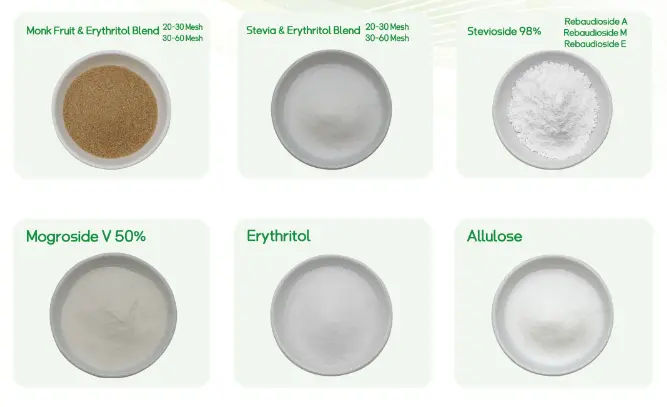
2. Monk Fruit Extract (Mogroside V)
- Source: Derived from Siraitia grosvenorii (a Chinese melon).
- Sweetness: 150–250x sweeter than sugar, zero calories, zero carbs.
- Uses: Protein powders, teas, diabetic-friendly snacks.
- Pros: Antioxidant properties, no bitter aftertaste.
- Cons: Expensive due to limited cultivation.
3. Allulose
- Source: Naturally found in figs, raisins, and maple syrup (but commercially produced via enzymatic conversion).
- Sweetness: 70% as sweet as sugar, 0.2–0.4 kcal/g (FDA considers it “zero calorie”).
- Uses: Baking (browns like sugar), ice cream, keto syrups.
- Pros: No aftertaste, behaves like sugar in recipes.
- Cons: May cause digestive issues in large amounts.
4. Erythritol
- Source: Fermented from corn or wheat (also found in pears, grapes).
- Sweetness: 70% as sweet as sugar, 0.24 kcal/g (practically zero).
- Uses: Sugar-free gum, chocolates (Lily’s), beverages.
- Pros: No blood sugar spike, cooling mint-like effect.
- Cons: Can cause bloating if overconsumed.
5. Tagatose
- Source: Derived from lactose (but safe for lactose-intolerant people).
- Sweetness: 92% as sweet as sugar, 1.5 kcal/g (low-calorie, not zero).
- Uses: Diabetic-friendly foods, prebiotic benefits.
- Pros: Caramelizes like sugar, gut-health support.
- Cons: Expensive, rare in commercial products.
🚀 Why Brands Are Switching to Natural Zero-Calorie Sugars
✔ Sugar Reduction Mandates (UK sugar tax, Mexico’s obesity laws).
✔ Diabetic & Keto-Friendly Demand (no blood glucose spikes).
✔ Clean Label Trend (consumers reject aspartame, sucralose).
✔ Gut Health Synergy (some, like allulose, act as prebiotics).
💡 Future Innovations
- Blends for Better Taste: Stevia + erythritol (Truvia), monk fruit + allulose.
- Fermentation Advances: Synthetic biology to produce rare sweeteners (e.g., Amyris’s sugarcane-derived Reb M).
- “Sugar-Like” Textures: Allulose’s ability to caramelize is a game-changer for baking.
Market Growth: The global natural sweetener market is projected to hit $9.9 billion by 2027 (CAGR 5.2%), with stevia leading (Grand View Research).
Bottom Line
Natural zero-calorie sugars offer sweetness without guilt, driving innovation in food, beverages, supplements, and even oral care. Brands that leverage these alternatives early can capture health-conscious consumers while complying with tightening sugar regulations worldwide.
Would you like a deep dive into a specific sweetener’s formulation or regulatory status?
Bulk Supply & Technical Support
Get direct factory quotes, COA, and MSDS within 12 hours. We support bulk supply and custom specifications.