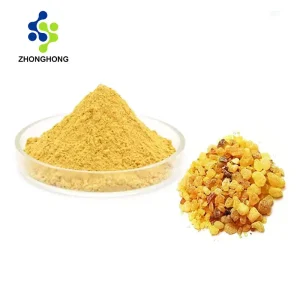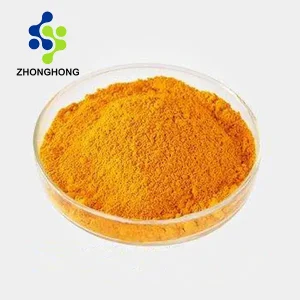

Hydroxybenzoates Manufacturer | Wholesale Botanical Preservative & Customized Herbal Extract Solutions
Hydroxybenzoates Product Overview
Hydroxybenzoates, commonly known as parabens, are a class of organic compounds derived from p-hydroxybenzoic acid. They are widely used as natural and synthetic preservatives in cosmetics, pharmaceuticals, and food applications due to their exceptional antimicrobial stability, safety profile, and formulation flexibility.
At AIHerba® (Shaanxi Zhonghong Investment Technology Co., Ltd.), we produce high-purity hydroxybenzoate ingredients using GMP-certified extraction and purification processes. Our plant operates under ISO, HACCP, and Halal standards, ensuring every batch meets international safety and performance benchmarks.
1. Product Source & Production Process
Our hydroxybenzoates are derived from natural benzoic acid sources through controlled esterification with selected alcohols (e.g., methyl, ethyl, propyl, butyl).
Key Production Technologies:
-
Step 1: Natural benzoic acid extraction or synthesis verification
-
Step 2: Esterification reaction with target alcohols under controlled pH
-
Step 3: Purification via fractional distillation
-
Step 4: Crystallization & micronization
-
Step 5: GMP-grade packaging & COA batch testing
This ensures high purity (>99%), low impurity profile, and excellent batch consistency suitable for food-grade and cosmetic-grade formulations.
2. Health & Functional Benefits
While hydroxybenzoates are primarily used as preservatives, their benefits extend beyond antimicrobial function:
-
Broad-spectrum microbial inhibition against bacteria, molds, and yeasts
-
Synergistic preservation when combined with organic acids or phenolics
-
Formulation stability under wide pH (4–8) and temperature ranges
-
Reduced oxidation in emulsions and creams
-
Low toxicity & high biocompatibility, supported by global regulatory approvals (FDA, EFSA, WHO)
Expert Insight:
“Parabens remain one of the most effective and stable preservatives available for modern formulations when used within safe, regulated concentrations.”
— Dr. Mei Zhang, Senior Cosmetic Chemist, AIHerba® Technical Division
3. Applications & Recommended Usage
Main Application Industries:
-
Cosmetics: Lotions, creams, shampoos, conditioners
-
Pharmaceuticals: Topical ointments, oral suspensions, antiseptic solutions
-
Food & Beverage: Preservative systems for sauces, syrups, and baked goods
-
Dietary Supplements: Stability enhancer for herbal and vitamin blends
Recommended Dosage:
-
Cosmetics: 0.1–0.3% total formulation weight
-
Pharmaceuticals: 0.05–0.2%
-
Food use: ≤0.1%, compliant with Codex Alimentarius
Best Formulation Practice:
Combine with antioxidants (e.g., tocopherols) or mild acids (citric acid) to enhance synergistic preservation.
4. Specifications & COA Highlights
| Category | Item | Specification / Limit | Test Method |
|---|---|---|---|
| Appearance | White crystalline powder | Conforms | Visual / USP |
| Purity | ≥99.0% | HPLC | |
| Moisture | ≤0.5% | GB/T 6283 | |
| Residue on Ignition | ≤0.1% | USP 281 |
Pesticide Residue Test
| Item | Limit (ppm) | Method |
|---|---|---|
| Organochlorine pesticides | ≤0.1 | GC-MS |
| Organophosphorus pesticides | ≤0.1 | GC-MS |
| Carbamates | ≤0.05 | LC-MS/MS |
Heavy Metals
| Item | Limit (ppm) | Method |
|---|---|---|
| Lead (Pb) | ≤1.0 | ICP-MS |
| Arsenic (As) | ≤1.0 | ICP-MS |
| Cadmium (Cd) | ≤0.5 | ICP-MS |
| Mercury (Hg) | ≤0.1 | ICP-MS |
Microbiological Tests
| Item | Limit | Method |
|---|---|---|
| Total Plate Count | ≤1000 CFU/g | GB 4789.2 |
| Yeast & Mold | ≤100 CFU/g | GB 4789.15 |
| E. coli | Negative | GB 4789.3 |
| Salmonella | Negative | GB 4789.4 |
5. Packaging, Storage & Shelf Life
-
Packaging: 25kg fiber drums / 1kg aluminum foil bags
-
Storage: Store in a cool, dry place away from sunlight and moisture
-
Shelf Life: 24 months unopened under recommended conditions
6. Logistics, Samples & MOQ
-
Free sample herbal extract: Available (10–50g sample pack)
-
MOQ: 1kg for pilot testing / 25kg for bulk order
-
Shipping: Global air freight or sea shipment with export documentation
-
Lead Time: 7–10 working days after payment confirmation
7. Certifications & Quality Assurance
-
GMP, ISO 9001, HACCP, Halal, Kosher
-
Third-party testing by Eurofins and SGS
-
Full traceability with batch COA, MSDS, and chromatograms
8. Applications by Industry
| Industry | Use Case | Form Example |
|---|---|---|
| Cosmetics | Antimicrobial preservative | Creams, masks, shampoos |
| Food & Beverage | Shelf-life extender | Bakery, sauces |
| Pharmaceuticals | Stabilizing agent | Topical ointments |
| Dietary Supplements | Preservative for botanical blends | Capsules, powders |
9. Why Choose AIHerba® Hydroxybenzoates
✅ 28+ years of production experience
✅ GMP-certified factory with ISO & Halal systems
✅ Consistent bulk supply with competitive wholesale price
✅ Custom formulation support – customized herbal extract options
✅ Trusted by global food-grade botanical extract supplier networks
✅ Proven results across 1,200+ client formulations
10. Frequently Asked Questions (FAQ)
Q1: Are hydroxybenzoates safe for cosmetics?
A: Yes. When used within regulated limits, they’re approved by the FDA, EU SCCS, and WHO for cosmetic and food applications.
Q2: Can I request a small batch for testing?
A: Absolutely. We offer free sample herbal extract packs for formulation testing before you buy in bulk.
Q3: Do you provide OEM or customized blends?
A: Yes. As a GMP-certified plant extract manufacturer, we support customized herbal extract formulations for specific pH or product types.
Q4: What’s the best pH range for hydroxybenzoates?
A: Optimal performance occurs between pH 4–8. Below pH 4, hydrolysis may occur; above pH 8, activity decreases.
11. References
-
U.S. Food & Drug Administration (FDA) – Parabens Overview
-
European Commission SCCS – Safety of Parabens
-
PubMed: Toxicological Review of Parabens
Contact & Verification
📧 sales@aiherba.com | info@aiherba.com | liaodaohai@gmail.com
🌐 www.aiherba.com
🏭 Shaanxi Zhonghong Investment Technology Co., Ltd.
— Trusted global manufacturer and bulk supplier of GMP-certified natural and synthetic plant extract ingredients.
Bulk Supply & Technical Support
Get direct factory quotes, COA, and MSDS within 12 hours. We support bulk supply and custom specifications.