
Confirm company and manufacturing site, matching lot documents, MOQ, packaging, shipment assumptions and change control.
Verify chemical identity, quantitative assay, targeted furanocoumarin impurities and matrix-specific formulation stability.
01. Quick Answer: What Should a Bakuchiol Buyer Verify?
When sourcing bulk Bakuchiol 99%, first confirm that the material is purified Bakuchiol (INCI Bakuchiol; CAS 10309-37-2), not crude babchi seed oil or a diluted blend. Next, compare the controlled specification with a signed COA for the actual lot. A qualified technical review should include quantitative HPLC assay, separate psoralen and isopsoralen data, residual-solvent evaluation, appropriate contaminants, intended-use compatibility, and manufacturing traceability.
AIHerba’s reference grade is specified at Bakuchiol ≥99.0% by HPLC external-standard assay and described as a light-yellow to amber viscous liquid. These are grade-level details; they do not verify today’s stock, current batch result, or shipment readiness.
02. Check 1 — Confirm Chemical Identity, INCI and Physical Form
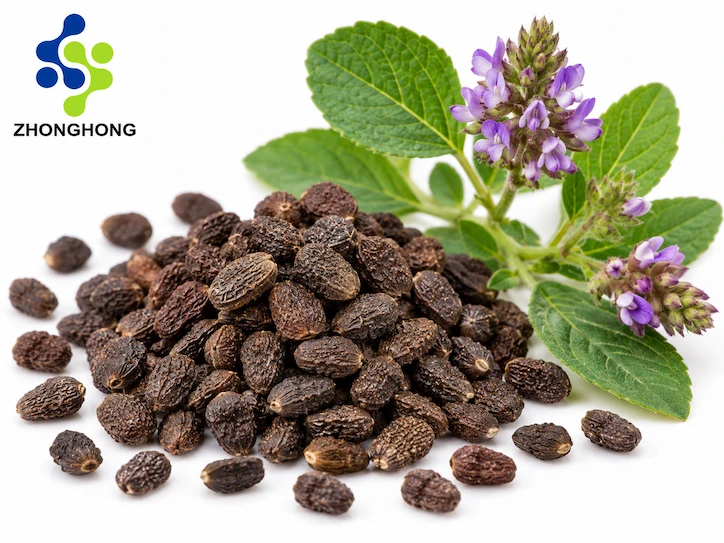
Bakuchiol is a defined plant-derived phenolic compound associated with Psoralea corylifolia L. seeds. It is chemically distinct from retinol and from crude babchi/bakuchi oil. Ingredient naming is critical because products described as “bakuchiol oil” can refer to concentrated active material, a diluted cosmetic blend, or a broader botanical extract.
| Identity field | What to request | Why it matters |
|---|---|---|
| INCI and CAS | Bakuchiol; 10309-37-2 | Aligns product label, product information file and purchasing documents |
| Source and part | Psoralea corylifolia L.; seed | Supports botanical traceability and impurity risk assessment |
| Form and composition | A specification for light-yellow to amber viscous liquid; written carrier declaration | Helps distinguish purified active from diluted oil blends or powder dispersions |
| Batch and product code | Matching codes on COA, label and quotation | Prevents qualification of a different commercial material |
A request for “120-mesh Bakuchiol 99% powder” needs clarification: the documented AIHerba grade is a viscous liquid. A dry dispersion or encapsulated version would require its own active-content and carrier specification. Availability must be confirmed rather than assumed.
03. Check 2 — Review the HPLC Assay, Not Just “99% Purity”
“HPLC 99%” is incomplete unless the laboratory explains how the number is obtained. A quantitative external-standard assay should identify the reference standard, calibration approach, peak assignment, integration criteria, system suitability and reporting basis. A peak-area percentage is not automatically equivalent to a mass-based w/w assay.
- Does the COA identify the actual tested lot and sampling date?
- Does the result state HPLC external-standard assay rather than only area normalization?
- Is reference-standard identification and validity documented?
- Can QA provide a method summary or signed chromatogram bearing the same lot ID?
- Are chromatogram acquisition dates, analyte labels and approval signatures consistent?
AIHerba’s documented reference specification is Bakuchiol ≥99.0% by quantitative HPLC external-standard assay. The selected commercial batch must be qualified independently using its own controlled specification and approved COA. Earlier batch data may be useful as a historical reference but must not be presented as the release result for current inventory.
04. Check 3 — Test Psoralen and Isopsoralen Separately
Source plants containing Bakuchiol can also contain furanocoumarins, including psoralen and isopsoralen. For cosmetic buyers, these compounds require targeted control. An HPLC assay of Bakuchiol itself does not establish the absence of these separate impurities.
| Supplier statement | What the buyer should require | Interpretation |
|---|---|---|
| “Low psoralen” | Named analytes, acceptance limits and batch values | Marketing wording alone is insufficient |
| “Psoralen <10 ppm; isopsoralen <10 ppm” | Two separate results plus method LOD/LOQ | Does not prove that the combined total is <10 ppm |
| “Non-detect” | LOD or LOQ and validated sample method | ND is method-dependent, not chemical zero |
| “Total psoralens” | Definition of included analytes and how total is calculated | Must match contract and regulatory assessment |
Request psoralen and isopsoralen results separately, including method sensitivity, units, and the individual acceptance criteria. If the buyer also specifies a combined limit, agree on the exact total-psoralens calculation. Two individual “below reporting limit” results do not automatically establish compliance with a lower combined threshold.
05. Check 4 — Reconcile Residual Solvents and Contaminant Reports
Residual solvents depend on the actual manufacturing route, and their acceptance criteria require appropriate technical and regulatory review. For solvent testing, request a signed GC-based report identifying each named solvent, analytical method, result, units, detection/quantitation limits and lot ID. “Hexane-free” should not be used as a synonym for absolutely zero hexane.
Request a current-lot residual-solvent report with an approved method, the relevant analyte list, test date, numerical results and limits of detection or quantitation. Compare the report with the COA and batch identifier, and refer any inconsistencies for QA clarification before material release.
- Confirm the relevant solvent panel and analytical reporting limits.
- Evaluate Pb, As, Cd and Hg against the destination market and finished-product risk assessment.
- Review microbiological acceptance criteria and sample handling procedures.
- Request pesticide testing when justified by botanical raw-material origin and buyer risk assessment.
- Make any third-party testing request specific to the analyte, method and sample lot.
06. Check 5 — Verify the COA, Technical Dossier and Document Control
A purchase decision relies on more than one PDF. The Certificate of Analysis (COA) documents a lot; the Technical Data Sheet (TDS) describes product characteristics and preliminary use guidance; and the Safety Data Sheet (SDS) addresses handling and hazard communication. Each document serves a different purpose.
| Document / record | What it should establish |
|---|---|
| Current-lot COA | Lot identifier, results, limits, methods, issue date and authorized release |
| Controlled specification | Agreed acceptance limits, analytical techniques and revision number |
| TDS and SDS | Formulation guidance, physical properties, handling and applicable classification |
| HPLC/GC evidence | Traceable data matching the document, method and batch identifier |
| Quality system / manufacturing site | Applicable site address, relevant certification scope, validity and change-control process |
If a supplier sends an attractive dossier but the COA, solvent report and chromatograms do not reconcile, place qualification on hold. Ask for corrected controlled documents rather than selecting the best-looking numerical value.
07. Check 6 — Qualify Solubility, Emulsion Process and Stability
Bakuchiol 99% is lipophilic and practically insoluble in water as an unformulated active. For serum and emulsion development, evaluate pre-blending into compatible cosmetic oils such as squalane or caprylic/capric triglyceride, then study the finished system. A water-based formulation requires a delivery or solubilization strategy that is independently validated.
The reference TDS gives a preliminary 0.5–1.0% w/w leave-on evaluation range and suggests avoiding unnecessary heat exposure, with cool-down incorporation below 40°C as an initial process approach. Those statements are starting points from the supplied dossier—not universally validated use limits or guarantees of stability.
- Assay active recovery at initial, accelerated and intended shelf-life checkpoints.
- Check visible precipitation, color drift, odor, pH response and viscosity changes.
- Challenge packaging compatibility and oxygen/light exposure with the full formula.
- For emulsions, assess phase separation after representative process and storage conditions.
- Confirm final-product claims with finished-formulation evidence, not ingredient-page statements.
08. Check 7 — Audit Manufacturing Traceability and Commercial Supply
A credible manufacturer qualification process should connect the selling legal entity, actual manufacturing site, selected grade, raw-material origin, batch-release workflow and change-control mechanism. AIHerba is a brand of Shaanxi Zhonghong Investment Technology Co., Ltd., based in Xi’an, China; the precise production-site address and applicable certificate scope should be supplied during supplier onboarding.
Request written confirmation of the actual manufacturing location, responsible manufacturer, relevant quality certificates and whether any contract steps are involved. Certification badges should not substitute for valid certificate copies and documented site scope.
Commercial qualification should confirm sample eligibility, order quantity, packaging, manufacturing/release lead time, Incoterms, export documents and destination-market responsibilities. The AIHerba commercial reference indicates a typical 1 kg MOQ and 1 kg aluminum-bottle packaging, both of which must be reconfirmed for the proposed order.
For continuity of supply, document whether changes in process, plant source, manufacturing site or impurity methods trigger advance notification to the buyer.
Send the target use, quantity, destination and the required assay and impurity criteria. Documentation and sample availability are confirmed for the selected lot.
09. Supplier Qualification Checklist — A Practical RFQ Template
A professional RFQ reduces the time spent exchanging generic brochures. Send the qualification questions together so commercial and technical teams can respond against the same proposed grade.
| RFQ item | What to provide or request |
|---|---|
| Material | Bakuchiol ≥99.0% HPLC (external standard); INCI and CAS match |
| End use | Cosmetic serum, emulsion, facial oil or another specified finished form |
| Batch evidence | Current-lot COA, assay report, psoralen/isopsoralen and solvent panel |
| Formulation sample | Sample amount and requested supporting documents |
| Quality onboarding | Manufacturing-site identity, certificate scope, process-change notification |
| Commercial | Expected order size, repeat forecast, pack size, destination and Incoterm |
A suitable opening message is: “We are qualifying Bakuchiol ≥99% HPLC for a cosmetic formulation. Please confirm the lot available, actual HPLC assay method, separate psoralen/isopsoralen results, residual-solvent panel, MOQ, packaging and quotation to [destination].”
10. How to Compare Supplier Quotes Without Hiding Risk
The lowest unit price is not necessarily the lowest qualified procurement cost. Compare price only after checking that the ingredients are genuinely equivalent, the test methods and impurity controls meet your acceptance criteria, and the shipment terms have the same risk allocation.
| Comparison dimension | Supplier A | Supplier B |
|---|---|---|
| Same exact ingredient and assay basis | To be verified | To be verified |
| Separately quantified psoralen/isopsoralen | To be verified | To be verified |
| Current-lot documentation and site identity | To be verified | To be verified |
| Compatible formulation sample | To be evaluated | To be evaluated |
| MOQ, packing, freight and destination charges | To be quoted | To be quoted |
For a true landed-cost comparison, separate material price, sample expense, external testing, shipping, customs, duties and expected lead time. Avoid interpreting a preliminary FOB quotation as a delivered cost.
11. Frequently Asked Buyer Questions
What HPLC purity should I request for bulk Bakuchiol?
Does a 99% HPLC assay prove psoralen-free Bakuchiol?
Is Bakuchiol 99% supplied as a powder?
Can a historical COA be used to release a new order?
What is the role of NMR or LC-MS for Bakuchiol?
How should Bakuchiol be incorporated into a serum?
What is the MOQ and what documentation can be requested?
Does a supplier certificate mean a finished cosmetic is approved?
12. Scientific References, Regulatory Context and Limitations
1. Dhaliwal S. et al. (2019), British Journal of Dermatology. A randomized, double-blind 12-week comparison of formulated topical Bakuchiol and retinol. This research does not validate an individual commercial raw-material batch. PubMed PMID 29947134.
2. Chaudhuri R.K. & Bojanowski K. (2014), International Journal of Cosmetic Science. Published work on Bakuchiol and retinol-like gene-expression activity. A mechanistic reference is not a certificate of ingredient performance or finished-product safety. PubMed PMID 24471735.
3. Regulation (EC) No 1223/2009 on cosmetic products. The legal framework for EU cosmetic products includes finished-product safety assessment and responsible-person duties. Ingredient documentation supports, but does not replace, compliance decisions. EUR-Lex official text.
Shaanxi Zhonghong Investment Technology Co., Ltd. | Xi’an, China
Bakuchiol 99% product page · Request a technical qualification package