1. Gingerol Extract (Standardized Gingerols) Supplier & GMP Manufacturer | Bulk / Wholesale Botanical Extract Grade
AIHerba® supplies Gingerol Extract as a standardized botanical ingredient for B2B buyers, including supplement brands, contract manufacturers, cosmetics producers, and OEM/ODM projects. As a GMP manufacturer and bulk supplier, we focus on procurement-ready deliverables: clear HPLC specifications, consistent batches, full documentation (COA/MSDS/TDS), and export-oriented packaging. Typical grades cover 5% / 10% / 20% Gingerols (HPLC), with optional water soluble or oil soluble formats depending on your formulation system. Every lot is controlled for identity, potency, contaminants, and microbiology, with batch traceability aligned with dietary supplement CGMP expectations.
CTA: Request specifications, COA, sample, and pricing factors (grade, quantity, destination, certifications) from our sales team.
Quick Summary
-
Ingredient name: Gingerol Extract (Standardized Gingerols from Zingiber officinale)
-
CAS No.: 23513-14-6 (reference: [6]-Gingerol marker compound)
-
Main applications: dietary supplements, functional foods/beverages, cosmetics, flavor systems
-
Typical purity: 5% / 10% / 20% total Gingerols (HPLC) (custom grades available)
-
Suitable industries: supplement brands, OEM/ODM factories, food & beverage manufacturers, cosmetic ingredient buyers
2. What Is Gingerol Extract?
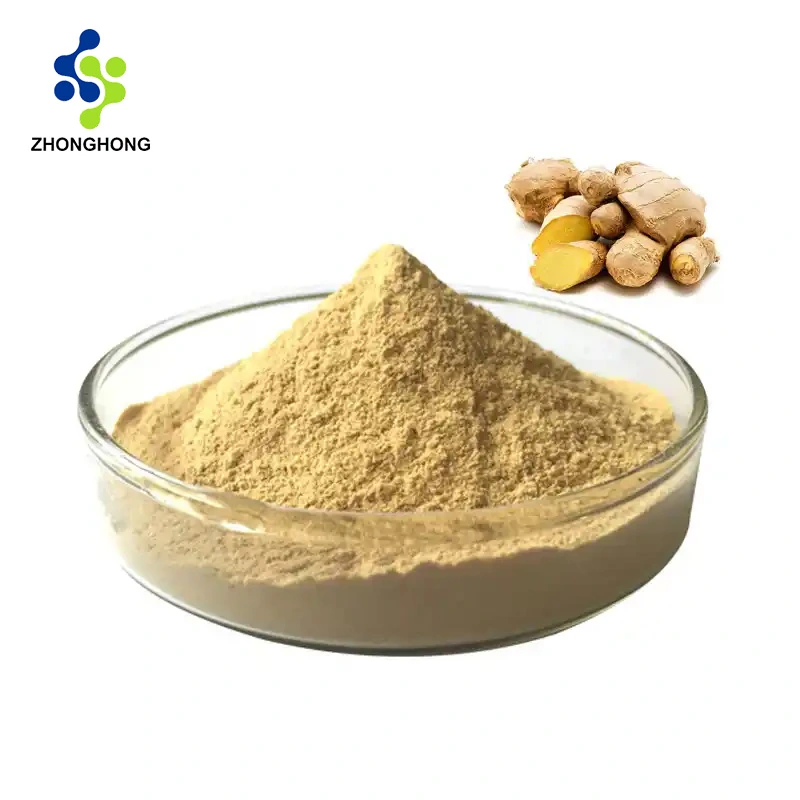
Gingerol Extract is a standardized botanical extract derived from ginger rhizome (Zingiber officinale), produced to deliver a controlled level of gingerols (often referenced using [6]-gingerol as a key analytical marker).
Unlike general “ginger powder” or non-standard ginger extracts, gingerol extract is specified by quantitative potency testing (e.g., HPLC) so procurement teams can lock formulation targets, sensory intensity, and batch-to-batch consistency.
Benefits
-
Potency control for production: standardized gingerols help keep functional positioning consistent across batches.
-
Formulation predictability: available in water soluble or oil soluble formats to match beverage, capsule, gummy, or topical systems.
-
Quality documentation readiness: suitable for vendor approval workflows (COA/MSDS/TDS, traceability).
Applications
-
Dietary supplements: capsules, tablets, powders, gummies (depending on grade/solubility)
-
Functional foods & beverages: shots, powders, instant mixes, syrups (often water soluble formats)
-
Cosmetics: warming/toning concepts, sensory-driven products (requires safety evaluation by your team)
Dosage / Specification
-
Commercial grades commonly used in manufacturing: 5% / 10% / 20% Gingerols (HPLC)
-
Choose grade based on target use level, sensory threshold, and regulatory positioning in your market.
Safety
This ingredient is supplied as a raw material for industrial formulation. It is not marketed to diagnose, treat, cure, or prevent disease. Use levels and labeling must comply with local regulations and your finished-product risk assessment. For general ginger safety considerations, see NCCIH resources.
Supplier / Manufacturer
AIHerba® provides bulk supply with GMP-oriented documentation and lot controls aligned with dietary supplement CGMP expectations.
3. Detailed Technical Specifications
Below is a procurement-friendly specification table. Final limits and methods can be customized to your target market and internal QA requirements.
| Item | Specification (Typical) |
|---|---|
| Product Name | Gingerol Extract (Standardized Gingerols) |
| Botanical Source | Zingiber officinale (ginger rhizome) |
| Grade Options | 5% / 10% / 20% Gingerols (HPLC) |
| Form Options | Water soluble / Oil soluble (on request) |
| Appearance | Fine powder |
| Odor/Taste | Characteristic ginger note |
| Identification | HPLC fingerprint / TLC / organoleptic |
| Assay | Total Gingerols by HPLC (marker-based) |
| Residual Solvents | Per process requirement; can align to USP <467> principles where applicable |
| Heavy Metals | ICP-MS / ICP-OES option (USP <233> aligned approach available) |
| Microbiology | Enumeration & specified pathogens per recognized methods (USP / FDA BAM) |
| Shelf Life | 24 months (typical, unopened; confirm per packaging and destination) |
| Storage | Cool, dry, sealed; protect from light and moisture |
4. Product Source & Raw Material Origin
-
Botanical identity: Ginger rhizome (Zingiber officinale) is authenticated by botanical/organoleptic controls and supplier documentation.
-
Origin strategy: raw material sourcing is managed through audited supply channels; origin can be offered by batch, depending on harvest and procurement cycle.
-
Traceability: each production lot is traceable to incoming raw material, processing records, and QC results for efficient vendor audits and recalls if needed.
5. Mechanism of Action & Functional Properties (Non-Medical)
Gingerol extract is primarily valued for functional properties relevant to formulation design:
-
Sensory profile: gingerols contribute to the characteristic pungent “warming” sensation.
-
Chemical behavior: gingerols are phenolic compounds; stability depends on temperature, pH, matrix, and processing steps (e.g., drying, heat exposure).
-
Analytical control: quantitative HPLC-based standardization enables consistent dosing in manufacturing. Reference materials and validated approaches for gingerol/shogaol measurement are widely used in analytical practice.
6. Application-Relevant Benefits (Regulatory-Safe)
-
Standardized potency: helps maintain consistent label claim support (ingredient amount consistency), not medical outcomes.
-
Manufacturing efficiency: predictable potency can reduce formulation rework and QC failures in scale-up.
-
Multi-industry fit: can be positioned as a functional botanical ingredient in supplement, food, or cosmetic concepts depending on local regulations and finished product design.
7. Usage Guidelines & Formulation Recommendations
Grade selection (practical guide):
-
5% Gingerols (HPLC): often used when a milder sensory profile is preferred or when cost-per-batch is tightly controlled.
-
10% Gingerols (HPLC): balanced option for many capsule/tablet systems.
-
20% Gingerols (HPLC): for formulas requiring stronger potency delivery at lower inclusion rates.
Solubility selection:
-
Water soluble gingerol extract: typically chosen for instant beverage powders, shots, syrups, and aqueous systems where dispersibility is critical.
-
Oil soluble gingerol extract: commonly used for softgels, oil blends, emulsions, and certain cosmetic bases.
Compatibility notes (engineering view):
-
Validate thermal steps (granulation, drying, hot-fill) against potency drift.
-
Confirm sensory threshold in your matrix (sweeteners, acids, flavors can amplify/soften pungency).
-
Use pilot batches for stability observation (appearance, odor, assay drift, microbiology).
8. Traditional & Modern Industrial Applications
-
Traditional use context: ginger has long been used globally as a culinary spice and botanical.
-
Modern industrial use: standardized gingerol profiles support consistent manufacturing in supplements and functional products.
For general ginger background and safety discussion, NCCIH provides a neutral, non-commercial overview.
9. COA & Quality Control Specifications
We provide COA / MSDS / TDS upon request, and support vendor qualification packages for B2B procurement. Microbiological methods may reference USP harmonized chapters and/or FDA BAM where appropriate.
9.1 Pesticide Residues (Release Specification Template)
| Pesticide Item | Limit (Typical) | Test Method (Typical) |
|---|---|---|
| Organochlorine pesticides (sum) | ≤ 0.1 mg/kg | GC-MS/MS |
| Organophosphorus pesticides (sum) | ≤ 0.1 mg/kg | GC-MS/MS |
| Pyrethroids (sum) | ≤ 0.1 mg/kg | GC-MS/MS |
| Carbamates (sum) | ≤ 0.1 mg/kg | LC-MS/MS |
| Chlorpyrifos | ≤ 0.05 mg/kg | GC-MS/MS |
| Cypermethrin | ≤ 0.05 mg/kg | GC-MS/MS |
Note: Pesticide residue expectations vary by market and monograph context for botanicals; we can align a limit set to your destination requirements and applicable quality standards.
9.2 Heavy Metals / Elemental Impurities (Release Specification Template)
| Element | Limit (Typical) | Test Method (Typical) |
|---|---|---|
| Lead (Pb) | ≤ 1.0 ppm | ICP-MS / ICP-OES (USP <233> aligned) |
| Arsenic (As) | ≤ 1.0 ppm | ICP-MS / ICP-OES |
| Cadmium (Cd) | ≤ 0.5 ppm | ICP-MS / ICP-OES |
| Mercury (Hg) | ≤ 0.1 ppm | ICP-MS / CV-AAS |
9.3 Microbiological Specifications (Release Specification Template)
| Micro Item | Limit (Typical) | Test Method (Typical) |
|---|---|---|
| Total Plate Count | ≤ 10,000 CFU/g | USP <61> / equivalent enumeration |
| Yeast & Mold | ≤ 1,000 CFU/g | AOAC / plate count method (e.g., AOAC 997.02 concept) |
| E. coli | Negative / 10 g | USP specified microorganisms / FDA BAM approach |
| Salmonella | Negative / 25 g | FDA BAM / USP specified microorganisms |
| Staphylococcus aureus | Negative / 10 g | USP specified microorganisms |
10. Manufacturing Process & Production Flow
A typical manufacturing flow for standardized gingerol extract (exact steps vary by grade/solubility):
-
Raw material receiving & identity verification (botanical authentication, documentation review)
-
Extraction (food-grade solvent or process-appropriate extraction; parameters controlled for marker retention)
-
Concentration & purification (remove insolubles; adjust potency range)
-
Standardization (blend to target gingerols assay; optional carrier for water dispersibility)
-
Drying & milling (particle control; moisture management)
-
In-process controls (assay checkpoints; moisture; appearance; microbial trend)
-
Final QC release (HPLC assay, contaminants, micro; COA issuance)
-
Packaging (sealed, tamper-evident; export labeling)
-
Batch archiving & traceability (retain samples and records for audit support)
11. Storage, Shelf Life & Packaging
-
Storage: keep sealed, cool, dry; avoid heat/light; prevent moisture uptake.
-
Shelf life: typically 24 months in original unopened packaging (final depends on storage conditions and grade).
-
Packaging options:
-
1 kg / 5 kg aluminum foil bags (inner)
-
25 kg fiber drum / carton (outer)
-
Palletized export packaging upon request
-
12. MOQ, Sample Policy & Global Shipping
MOQ (typical):
-
Standard grades: 25 kg (1 drum)
-
Pilot orders: can be discussed for qualified OEM/ODM projects
Sample policy:
-
Lab sample available for formulation and qualification testing (assay confirmation, sensory check, dispersion test).
-
Courier shipment supported.
Lead time:
-
Commonly 3–7 working days for stock items; 10–20 working days for customized solubility/packaging (confirm by inquiry).
Global shipping:
-
Air express / air cargo / sea freight (Incoterms can be arranged per project).
-
Export documents support for customs clearance (commercial invoice, packing list, COA; additional documents upon request).
13. Clinical Data & Scientific Research (Reference-Only, No Medical Conclusions)
Research literature discusses gingerols (including [6]-gingerol) across various experimental contexts. For example:
-
A phase II randomized, double-blind placebo-controlled study investigated 6-gingerol in a clinical setting (reference-only; not a claim for finished products).
-
Reviews summarize analytical methods, stability considerations, and biological activity discussions in the literature.
-
NCCIH provides a cautious, public-health style overview of ginger’s use and safety.
Important: procurement and formulation decisions should rely on specifications, stability testing, regulatory compliance, and your finished-product substantiation strategy—not isolated study outcomes.
14. Applicable Industries
-
Dietary supplement brands and contract manufacturers
-
Functional food & beverage manufacturers
-
Cosmetic ingredient sourcing teams and private label manufacturers
-
Flavor houses / ingredient blenders
-
Distributors serving nutraceutical, food, and personal care supply chains
15. Industry Application Scenarios
-
Capsule OEM project (North America):
A brand targets consistent sensory intensity and batch compliance. They select 10% Gingerols (HPLC), request COA/MSDS, set micro limits aligned to their internal SOP, and use incoming QC to verify HPLC assay and microbiology before encapsulation. -
Functional beverage powder (SEA / Middle East):
A beverage factory needs rapid dispersion and stable taste profile. They evaluate a water soluble gingerol extract in pilot mixing trials, compare dispersibility across pH ranges, and lock the grade based on sensory threshold and powder flow properties. -
Topical warming concept (EU cosmetics):
A cosmetics manufacturer uses an oil soluble option for emulsion compatibility. They run stability (odor/color), preservative compatibility, and safety assessment in accordance with their cosmetic compliance workflow before scale-up.
16. Supplier Comparison & Procurement Guide
When comparing a gingerol extract supplier / manufacturer, procurement teams typically verify:
A) Spec clarity (avoid “marketing specs”)
-
Do you define assay as total gingerols by HPLC with an identifiable marker profile?
-
Is there a stable specification range (5/10/20%) rather than “high content” statements?
B) Documentation readiness
-
COA/MSDS/TDS availability, batch traceability, and retention samples for investigations.
-
Clear contaminant program (pesticides, heavy metals, micro) and methods.
C) Manufacturing compliance signals
-
GMP facility status and basic CGMP alignment for dietary supplements.
D) Commercial feasibility
-
MOQ, lead time, sample policy, packaging options, and export support.
Pricing factors (instead of posting a price):
-
Gingerols grade (5/10/20%), solubility system (water/oil), order quantity, destination & shipping mode, required certifications, and additional testing scope.
17. FAQ
-
Do you provide Gingerol Extract in bulk / wholesale?
Yes. We supply bulk packaging and support contract manufacturing and distributor procurement workflows. -
What grades do you offer (5% / 10% / 20%)?
Common commercial grades include 5% / 10% / 20% Gingerols (HPLC). Custom targets can be discussed for OEM projects. -
Can I get COA and MSDS before placing an order?
Yes. COA/MSDS/TDS can be shared for evaluation and vendor approval. -
What is your MOQ and sample policy?
Typical MOQ is 25 kg. Samples are available for qualified buyers for formulation validation. -
How do you test heavy metals and microbiology?
Elemental impurities can be measured by ICP methods aligned with USP approaches (e.g., <233>).
Micro testing may reference USP microbiological chapters and/or FDA BAM procedures depending on your requirement. -
What lead time should we expect for production and shipping?
Stock items often ship within 3–7 working days. Custom solubility/packaging projects may require additional time; confirm at RFQ stage.
18. RFQ Checklist (To Get a Fast Quotation)
To receive accurate gingerol extract price factors and lead time, please include:
-
Target grade (5% / 10% / 20% Gingerols HPLC)
-
Desired format (water soluble / oil soluble)
-
Annual volume estimate and first order quantity
-
Destination country & preferred shipping mode
-
Required certifications and testing scope (pesticides, micro, heavy metals, solvents)
19. References & Regulatory Sources
Manufacturer & Quality Assurance
Manufactured by AIHerba® (Shaanxi Zhonghong Investment Technology Co., Ltd.),
a GMP-certified manufacturer specializing in high-purity botanical extracts
for dietary supplements, cosmetics, and pharmaceutical applications.
✔ GMP-certified production facility
✔ Full COA & technical specifications available
✔ Batch traceability & strict quality control
✔ Bulk supply & OEM/ODM services for global B2B buyers
📧 sales@aiherba.com
| info@aiherba.com
| liaodaohai@gmail.com
🌐 www.aiherba.com
If you are looking for a bulk supplier / OEM manufacturer of Gingerol Extract, contact us for specifications, COA, and pricing.