
1. Horse Chestnut Seed Extract (Standardized Aescin/Escin 20% / 40%) Supplier & GMP Manufacturer | Bulk Wholesale Botanical Extract (Cosmetic & Nutraceutical Grade)
AIHerba® is a GMP manufacturer and bulk supplier of Horse Chestnut Seed Extract standardized to Aescin (Escin) 20% / 40% by HPLC for professional buyers (importers, contract manufacturers, brands, OEM/ODM). We focus on procurement-grade consistency: controlled raw material sourcing, in-process standardization, and release testing covering assay, pesticide residues, heavy metals, and microbiology. Each shipment can include a complete documentation package (COA, MSDS, TDS/spec sheet, batch traceability statement) to support your internal QA and regulatory filing.
CTA: Request COA + specification, ask for MOQ, pricing, and lead time, or discuss OEM/ODM supply contracts for your target market (US/EU/SEA).
Quick Summary
-
Ingredient name: Horse Chestnut Seed Extract (Standardized to Aescin/Escin)
-
CAS No: 6805-41-0 (marker compound: Aescin/Escin; botanical extract is a multi-component mixture)
-
Main applications: Cosmetic gels/creams (eye/leg/body care), nutraceutical blends, botanical complexes, industrial botanical formulations
-
Typical purity: Aescin/Escin 20% or 40% (HPLC)
-
Suitable industries: Dietary supplements, cosmetics & personal care, pharmaceutical raw material supply (B2B), OEM/ODM manufacturing
2. What Is Horse Chestnut Seed Extract?
Horse Chestnut Seed Extract is a standardized botanical ingredient derived from the seeds of Aesculus hippocastanum. In commercial supply chains, it is commonly standardized to Aescin (Escin) as a marker compound to ensure consistent quality and repeatable performance across batches. NCCIH notes that standardized extracts are typically used when horse chestnut is consumed, and also highlights safety concerns with raw plant parts.
2.1 Benefits (Regulatory-Safe)
-
Provides functional properties suitable for formulation positioning (e.g., sensory feel, appearance-support concepts in topical products).
-
Supports standardization-driven procurement (buying by assay %, not by vague “extract ratio” only).
-
Useful for brands/OEMs needing stable, document-backed ingredient inputs (COA/MSDS/spec sheet).
2.2 Applications
-
Cosmetics: eye-area gel/cream, leg gel, body care emulsions, soothing gel concepts
-
Nutraceutical manufacturing: botanical complexes where standardized botanical extracts are preferred for consistency
-
Industrial application: standardized botanical blends requiring QC and traceability
2.3 Dosage / Specification
This is a raw material procurement page; consumer dosing is not provided. Instead, quality is defined by:
-
Aescin/Escin assay (%), test method (HPLC)
-
Contaminant limits (pesticides / heavy metals / microbiology)
-
Physical parameters (mesh size, moisture, appearance)
-
Documentation (COA, MSDS, TDS) and batch traceability
2.4 Safety
No treatment, diagnosis, or prevention claims are made. This page describes ingredient quality, industrial use, and formulation-relevant properties only. For background safety context, NCCIH notes that raw horse chestnut seeds/bark/leaves are unsafe when consumed, and that standardized products are typically used in studies/commerce.
2.5 Supplier / Manufacturer
AIHerba® provides factory-direct bulk wholesale supply and OEM/ODM support for B2B buyers with procurement requirements such as MOQ, pricing tiers, lead time, audit support, and QC method transparency.
Primary CTAs (Procurement):
-
Request COA & Specification Sheet (TDS)
-
Get Bulk Pricing (Wholesale) + MOQ
-
Confirm Lead Time + Packaging Options
-
Ask for OEM/ODM Manufacturing Support
3. Detailed Technical Specifications (Table)
| Parameter | Specification / Notes |
|---|---|
| Product name | Horse Chestnut Seed Extract |
| Botanical name | Aesculus hippocastanum |
| Plant part | Seed |
| Grade | Cosmetic Grade / Nutraceutical Grade (buyer-selected) |
| Standardization | Aescin (Escin) 20% or 40% |
| Assay method | HPLC (method summary available on request) |
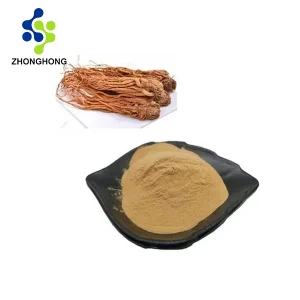
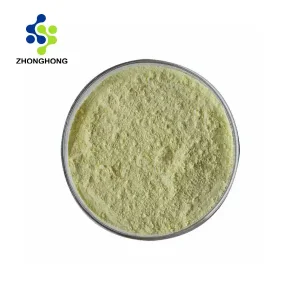
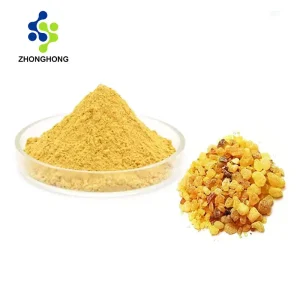
| Appearance | Brown-yellow to light-brown powder (varies by assay/carrier) |
| Odor | Characteristic |
| Particle size | 80 mesh typical (customizable) |
| Loss on drying | ≤ 5.0% |
| Residual solvents | Controlled; aligned with risk-based solvent guidance (Q3C) |
| Heavy metals | ICP-MS panel available; aligned with elemental impurity risk approach (Q3D) |
| Microbial limits | USP <61>/<62> methods supported (see QC tables) |
| Packaging | 1 kg foil bag; 10–25 kg fiber drum (double-liner) |
| Shelf life | 24 months (sealed, cool/dry) |
| Documents | COA / MSDS / TDS / Traceability statement (on request) |
| Keywords covered | Supplier, Manufacturer, Bulk, Wholesale, Specification, Process, MOQ, COA, Pricing, Lead Time, Regulatory Compliance |
4. Product Source & Raw Material Origin
-
Raw material origin: traceable seed sourcing under supplier qualification.
-
Incoming inspection: identity verification, foreign matter control, moisture control, contamination risk screening (pesticides/heavy metals/micro) based on destination-market requirements.
-
Lot integrity: each production batch is linked to the incoming raw material lot(s) via batch records for traceability.
Procurement note: for vendor approval, request a Documentation Package including COA template, MSDS, spec sheet, and batch traceability statement.
5. Mechanism of Action & Functional Properties (Non-Medical)
Aescin/Escin is described as a mixture of triterpene saponins derived from horse chestnut seed.
This section is provided to help R&D and purchasing teams understand functional properties without medical claims:
-
Saponin-driven surface activity: may influence wetting/dispersion behavior and sensory feel in certain topical systems (formulation-dependent).
-
Standardization effect: controlling marker assay (Aescin %) helps stabilize procurement outcomes (lot-to-lot consistency) and supports predictable formulation performance.
-
Industrial application fit: commonly sourced where quality control + regulatory compliance + documentation are required, not as a commodity herb powder.
6. Application-Relevant Benefits (Regulatory-Safe)
For industrial formulation and product positioning, Horse Chestnut Seed Extract is commonly used for:
-
Appearance-support concepts in cosmetics (e.g., eye-area “refreshed look” positioning; body/leg gel toning-feel narratives)
-
Botanical complex design in nutraceutical manufacturing where standardized botanical extracts are preferred for consistent labeling inputs
-
Procurement efficiency: purchasing by assay and QC panel rather than only by “extract ratio”
(No cure/treat/prevent claims. Benefits are framed as functional properties and industrial uses.)
7. Usage Guidelines & Formulation Recommendations
Typical use levels (formulation reference only):
-
Cosmetic leave-on: 0.1%–2.0% (adjusted by Aescin %, solubility, claim strategy)
-
Cosmetic rinse-off: 0.05%–0.5%
-
Nutraceutical manufacturing: use is determined by your regulatory labeling strategy, target assay contribution, and stability compatibility (discuss with your compliance team).
Formulation notes (practical):
-
For water-based gels, pre-disperse and validate clarity/viscosity impact; choose assay/carrier accordingly.
-
Confirm pH and preservative compatibility through stability testing.
-
For contract manufacturing, request our formulation support notes (dispersion steps, recommended in-process checks).
CTA: Ask for a recommended grade (cosmetic vs nutraceutical), plus spec sheet and COA for your application.
8. Traditional & Modern Industrial Applications
-
Traditional background: horse chestnut has a long history of traditional use; modern supply chains focus on standardized extracts for consistency.
-
Modern industrial application: standardized Aescin/Escin extracts are integrated into:
-
Cosmetic eye/leg/body care concepts
-
Nutraceutical botanical blends and standardized ingredient programs
-
Export-oriented OEM/ODM projects requiring documentation and QC compliance
-
9. COA & Quality Control Specifications
9.1 Pesticide Residues (Table: Item / Limit / Method)
| Pesticide Item | Limit (Typical) | Test Method |
|---|---|---|
| Organochlorines (e.g., BHC, DDT) | NMT 0.05 mg/kg each | GC–MS/MS |
| Organophosphates (screen) | NMT 0.05 mg/kg each | GC–MS/MS |
| Pyrethroids (screen) | NMT 0.05 mg/kg each | GC–MS/MS |
| Multi-residue pesticide scan | Complies with customer limits | GC–MS/MS / LC–MS/MS |
| Aflatoxin B1 | NMT 2.0 μg/kg | HPLC |
| Total aflatoxins (B1+B2+G1+G2) | NMT 4.0 μg/kg | HPLC |
9.2 Heavy Metals / Elemental Impurities (Table)
Risk-based control strategies are aligned with ICH elemental impurity principles where applicable.
| Item | Limit (Typical) | Test Method |
|---|---|---|
| Lead (Pb) | ≤ 1.0 ppm | ICP–MS |
| Arsenic (As) | ≤ 1.0 ppm | ICP–MS |
| Cadmium (Cd) | ≤ 0.5 ppm | ICP–MS |
| Mercury (Hg) | ≤ 0.1 ppm | ICP–MS |
9.3 Microbiology (Table)
Methods and acceptance approach can reference USP microbiological examination chapters for nonsterile products.
| Micro Item | Limit (Typical) | Test Method |
|---|---|---|
| TAMC (Total Aerobic Microbial Count) | ≤ 10,000 CFU/g | USP <61> |
| TYMC (Total Yeast & Mold Count) | ≤ 1,000 CFU/g | USP <61> |
| E. coli | Absent in 10 g | USP <62> |
| Salmonella | Absent in 25 g | USP <62> |
| Staphylococcus aureus | Absent (as specified) | USP <62> |
| Pseudomonas aeruginosa | Absent (as specified) | USP <62> |
QC deliverables for B2B buyers:
-
Multi-lot COA availability (evaluate lot-to-lot consistency)
-
Retain sample policy + complaint-handling record readiness
-
Batch traceability: raw material → production batch → finished goods lot
CTA: Request COA + micro/heavy metal/pesticide panel for vendor qualification.
10. Manufacturing Process & Production Flow
Manufacturing process overview (industrial, audit-friendly):
-
Supplier qualification & incoming inspection (identity, moisture, contaminants)
-
Controlled extraction (process parameters defined for standardization)
-
Filtration and concentration
-
Purification/standardization to target Aescin 20%/40%
-
Drying (moisture control)
-
Milling & sieving (mesh control)
-
In-process QC checkpoints (assay trend, moisture trend)
-
Final release testing (HPLC + contaminant panels)
-
Packaging and labeling with batch information for traceability
Semantic keywords covered: manufacturing process, production flow, quality control, regulatory compliance, industrial application.
11. Storage, Shelf Life & Packaging
-
Storage: keep tightly sealed; store in a cool, dry place; protect from direct sunlight
-
Shelf life: 24 months under recommended storage
-
Packaging: 1 kg foil bag (inner) + carton; 10–25 kg fiber drum with double liners; palletization available
-
Shipping readiness: moisture barrier, shock protection, customs documentation support
12. MOQ, Sample Policy & Global Shipping
-
MOQ: based on assay (20% vs 40%), grade, and packaging; MOQ for first orders can be flexible for qualified buyers
-
Sample policy: COA-supported samples available for R&D and pre-qualification
-
Pricing: quote-based depending on specification, annual volume, and documentation requirements
-
Lead time: typically 7–20 working days depending on inventory and standardization schedule
-
Global shipping: air/sea/express; Incoterms supported (EXW/FOB/CIF)
CTA buttons (place near inquiry form):
-
Get Bulk Pricing (Wholesale)
-
Ask MOQ & Lead Time
-
Request COA / MSDS / TDS
-
Talk to an OEM/ODM Manager
13. Clinical Data & Scientific Research (Reference Only; No Medical Conclusions)
This section is included only as literature context for technical and regulatory teams; it does not imply medical claims or outcomes for finished products.
-
A Cochrane evidence summary reports that clinical trials on horse chestnut seed extract in a specific condition context used extracts standardized to escin as the main constituent.
-
NCCIH provides a safety and background overview for horse chestnut, including notes on use and safety considerations.
14. Applicable Industries
-
Dietary supplement manufacturing (B2B ingredient sourcing)
-
Cosmetics & personal care manufacturers
-
Contract manufacturing (OEM/ODM)
-
Importers & distributors
-
Formulation labs and private label brands
-
Pharmaceutical/raw material supply chains (as a botanical input; buyer-defined compliance scope)
15. Industry Application Scenarios
-
Cosmetics factory (eye gel export line): Requires cosmetic grade standardized horse chestnut extract with USP-based micro methods, multi-residue pesticide panel, and batch traceability to support EU/UK distributor audits.
-
Nutraceutical contract manufacturer: Buys bulk/wholesale Aescin 20% extract for botanical complex capsules; procurement requires COA + MSDS + lead time guarantee and multi-lot COA review for consistency.
-
Regional distributor (multi-country): Needs factory-direct supplier able to provide documentation packs and flexible packaging (1 kg / 25 kg) with stable annual supply planning and defined QC release windows (assay + contaminants).
16. Supplier Comparison & Procurement Guide
Use this checklist to evaluate a horse chestnut seed extract supplier / aescin supplier / escin supplier:
A) Standardization & Identity
-
Is the extract standardized to Aescin/Escin % with HPLC documentation?
-
Can the supplier provide a method summary and reference standard approach?
B) Quality Control Depth
-
Pesticide residues: multi-residue strategy and target market limits (EU/US)
-
Heavy metals: ICP-MS and risk approach aligned to elemental impurity guidance (Q3D)
-
Microbiology: USP <61>/<62> or equivalent methods
C) Regulatory Compliance & Documentation
-
Are COA/MSDS/TDS issued per batch with traceable lot numbers?
-
Can they support dietary supplement GMP expectations (for supplement manufacturers) and cosmetic GMP guidelines (for cosmetic factories)?
D) Commercial Terms
-
Transparent MOQ policy, scalable pricing tiers, stable lead time, packaging options, global shipping capability.
Procurement tip: Request 3 recent COAs from different lots to verify lot-to-lot consistency, not just a template.
17. FAQ
-
Are you a Horse Chestnut Seed Extract supplier or a GMP manufacturer?
We are a GMP-certified manufacturer offering factory-direct bulk wholesale supply and OEM/ODM services. -
Do you offer Aescin (Escin) 20% and 40% standardized grades?
Yes. Standard offerings include Aescin/Escin 20% and 40%, tested by HPLC; customization can be discussed for qualified projects. -
Can you provide COA, MSDS, and a full specification sheet (TDS)?
Yes—COA/MSDS/TDS are available for B2B qualification and procurement documentation. -
What is the CAS number and molecular weight?
The marker compound is referenced as Aescin/Escin (CAS 6805-41-0). Because escin/aescin is commonly described as a mixture of saponins, molecular weight can depend on the reference standard/component; we can confirm the reference standard used in your QC file upon request. -
What are your MOQ, pricing, and lead time for bulk orders?
MOQ and pricing depend on assay, grade, and packaging. Typical lead time is 7–20 working days; contact us for a formal quotation including global shipping terms. -
Do you support OEM/ODM projects using horse chestnut extract?
Yes—AIHerba® supports OEM/ODM with documentation packs, QC alignment, and export-ready packaging for B2B buyers.
19. References & Regulatory Sources
Below are authoritative sources commonly used by QA/regulatory teams for background, compliance context, and test-method alignment:
1) NIH / NCCIH – Horse Chestnut (Usefulness & Safety)
https://www.nccih.nih.gov/health/horse-chestnut
Content: NIH fact sheet covering background, use, and safety considerations for horse chestnut.
2) Cochrane Evidence – Horse chestnut seed extract for long-term/chronic venous insufficiency
https://www.cochrane.org/evidence/CD003230_horse-chestnut-seed-extract-long-term-or-chronic-venous-insufficiency
Content: Evidence summary; notes clinical trials used extracts standardized to escin (reference only, not a claim).
3) FDA – Dietary Supplements cGMP Overview (21 CFR Part 111 resources)
https://www.fda.gov/food/current-good-manufacturing-practices-cgmps-food-and-dietary-supplements/current-good-manufacturing-practices-cgmps-dietary-supplements
Content: FDA hub page for dietary supplement GMP regulation and guidance materials.
4) eCFR – 21 CFR Part 111 (Current text)
https://www.ecfr.gov/current/title-21/chapter-I/subchapter-B/part-111
Content: Current Good Manufacturing Practice in Manufacturing, Packaging, Labeling, or Holding Operations for Dietary Supplements.
5) ISO – ISO 22716:2007 Cosmetics GMP (Standard description)
https://www.iso.org/standard/36437.html
Content: ISO overview page describing cosmetics GMP guidelines for production/control/storage/shipment.
6) EU Cosmetics Regulation (EC) No 1223/2009 (EUR-Lex)
https://eur-lex.europa.eu/eli/reg/2009/1223/oj/eng
Content: Official EU legal text governing cosmetic products (compliance context).
7) USP General Chapter <61> Microbiological Examination of Nonsterile Products (PDF)
https://www.uspnf.com/sites/default/files/usp_pdf/EN/USPNF/generalChapter61.pdf
Content: Microbial enumeration test framework (commonly referenced for nonsterile product microbiology).
8) ICH Q3C(R8) – Residual Solvents (PDF, ICH)
https://database.ich.org/sites/default/files/ICH_Q3C-R8_Guideline_Step4_2021_0422_1.pdf
Content: Risk-based approach and PDE limits for residual solvents (pharma-quality reference).
9) ICH Q3D(R2) – Elemental Impurities (PDF, ICH)
https://database.ich.org/sites/default/files/Q3D-R2_Guideline_Step4_2022_0308.pdf
Content: Risk-based assessment and control strategy for elemental impurities.
10) PubChem – Escin / Aescin record (CID reference endpoint)
https://pubchem.ncbi.nlm.nih.gov/rest/pug_view/data/compound/6433489/JSON
Content: Identifiers and compound record data for escin/aescin (reference for CAS/identity context).
Manufacturer & Quality Assurance
Manufactured by AIHerba® (Shaanxi Zhonghong Investment Technology Co., Ltd.),
a GMP-certified manufacturer specializing in high-purity botanical extracts
for dietary supplements, cosmetics, and pharmaceutical applications.
✔ GMP-certified production facility
✔ Full COA & technical specifications available
✔ Batch traceability & strict quality control
✔ Bulk supply & OEM/ODM services for global B2B buyers
📧 sales@aiherba.com | info@aiherba.com | liaodaohai@gmail.com
🌐 www.aiherba.com
If you are looking for a bulk supplier / OEM manufacturer of Horse Chestnut Seed Extract (Standardized Aescin/Escin 20%/40%), contact us for specifications, COA, and pricing.