
Ashwagandha Efficacy Timeline: Clinical Study Duration, Standardization & Industrial Evaluation
When a product developer asks, “How long does Ashwagandha take to work?” they aren’t looking for a subjective testimonial. They are looking for Endpoint Evaluation Timelines to justify label claims or design clinical protocols.
At AIHerba®, we emphasize that “time-to-efficacy” is not a fixed number—it is a variable dependent on the Bioactive Fingerprint of the extract. Understanding why a 5% HPLC root extract yields different results than a 10% leaf-heavy blend is critical for B2B procurement.
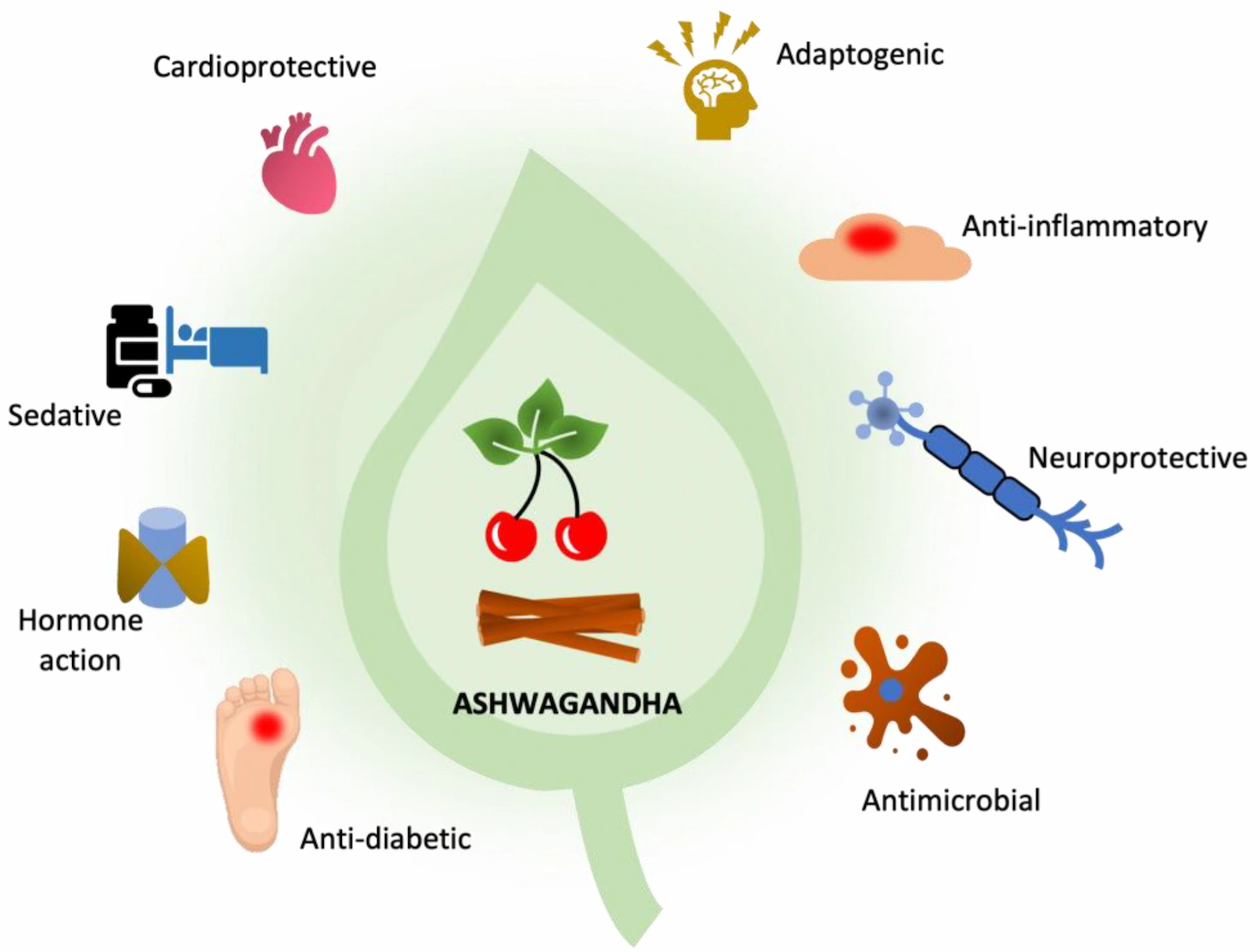
01. The Standardization Factor: Why Timelines Vary
In the industrial supplement market, different Ashwagandha extracts are not interchangeable. The speed of physiological response is directly tied to the concentration of withanolides and the specific plant part used.
| Factor | Why It Matters for Efficacy Timeline |
| Extract Type | Ratio (e.g., 10:1) vs. Standardization (5% Withanolides). Standardized grades offer more predictable timelines. |
| Withanolide Level | Higher potency (HPLC verified) typically aligns with the 8-week clinical success window. |
| Root vs. Leaf | Material identity affects the withanolide-withaferin A balance, impacting stress vs. performance endpoints. |
| Daily Dose | Determines comparability to published clinical data (typically 300mg–600mg). |
| Analytical Method | Determines if the “potency” on the COA is real (HPLC) or inflated (UV/Gravimetric). |
02. Clinical Study Duration: The Scientific Consensus
Based on meta-analyses of randomized controlled trials (RCTs), Ashwagandha is rarely evaluated for “instant” effects. It is a cumulative adaptogen.
A. Stress and Anxiety Endpoints (8-Week Baseline)
The majority of clinical evidence (e.g., using standardized root extracts) utilizes an 8-week study duration. Significant reductions in serum cortisol and perceived stress scales are typically recorded between Day 30 and Day 60.
B. Physical Performance and Muscle Strength (8–12 Weeks)
Studies focusing on muscle recovery and VO2 max often require a longer window. For brands formulating for sports nutrition, a 12-week evaluation period is the industrial standard for demonstrating statistical significance.
C. Sleep Quality and Latency (4–10 Weeks)
Improvements in sleep efficiency are often observed earlier, with some studies showing a trend toward improvement as early as Day 14, though peak results are achieved at Weeks 8–10.
Support Your Label Claims with Real Data
Request our Ashwagandha Stability & Efficacy Data Pack, featuring active retention studies and clinical endpoint summaries.
03. R&D Checklist: Designing for Success
If you are developing a flagship Ashwagandha product, your R&D team must align the extract specification with the expected consumer experience:
- Baseline Verification: Use HPLC-Standardized Root Extract to mirror the methodology used in 90% of successful RCTs.
- Solubility & Delivery: Ensure the extract’s bulk density is optimized for rapid disintegration in the gut to prevent “Lag-Time” in absorption.
- Label Claims: Base your “Works in X weeks” claims on the specific standardization percentage of the batch you source.
04. FAQ: Technical Insights for Product Development (PAA)
Q: Can a 10% Withanolide extract work faster than a 5% extract?
A: Not necessarily. Efficacy depends on the Full-Spectrum profile. A leaf-heavy 10% extract may provide higher withanolide levels but lack the synergistic alkaloids found in a 5% pure root extract that are essential for long-term adaptogenic balance.
Q: Why do some studies show results in 4 weeks while others take 12?
A: This is usually due to “Endpoint Variance.” Cortisol markers (Stress) may respond faster than muscle hypertrophy (Strength). It is vital to match your extract’s standardization to your specific marketing endpoint.
Q: How does the analytical method (HPLC vs UV) impact the efficacy timeline?
A: If a supplier uses UV testing, they may claim “10% Withanolides” when the true potency is only 4%. In this case, the product will likely fail to meet clinical efficacy timelines because the active load is insufficient.
Q: Is “Standardized Extract” more predictable than “10:1 Ratio”?
A: Yes. Ratios are based on raw material input, which varies seasonally. Standardized extracts (HPLC) ensure that every capsule contains the exact milligram count of actives required to hit clinical targets.
Ready for Industrial Production?
Secure consistent supply of Bulk Ashwagandha Root Extract (5% HPLC) with DDP global logistics.
05. Strategic Sourcing: The AIHerba® Advantage
We provide the technical data needed to support your brand’s efficacy story.
- Pharmacopoeia Alignment: Our extracts are standardized according to USP-NF protocols.
- Stability Data: We provide real-time data showing active retention over 24 months.
- Analytical Transparency: Request our HPLC Fingerprint Pack for current batches.
Consult with our Ph.D. Formulation Expert
Need guidance on bioavailability enhancement or synergistic longevity stacking for your Ashwagandha formula? Speak directly with our technical director.
Specializing in Adaptogen Pharmacokinetics and Industrial Stability.
References & Scientific Authority
- Cureus Journal of Medical Science: A Randomized, Double-Blind, Placebo-Controlled Study of Safety and Efficacy of High-Concentration Full-Spectrum Ashwagandha Root Extract.
- Journal of the International Society of Sports Nutrition: Effects of Ashwagandha on muscle strength and recovery.
- PubMed: Adaptogenic and Anxiolytic Effects of Withania Somnifera (8-week duration analysis).