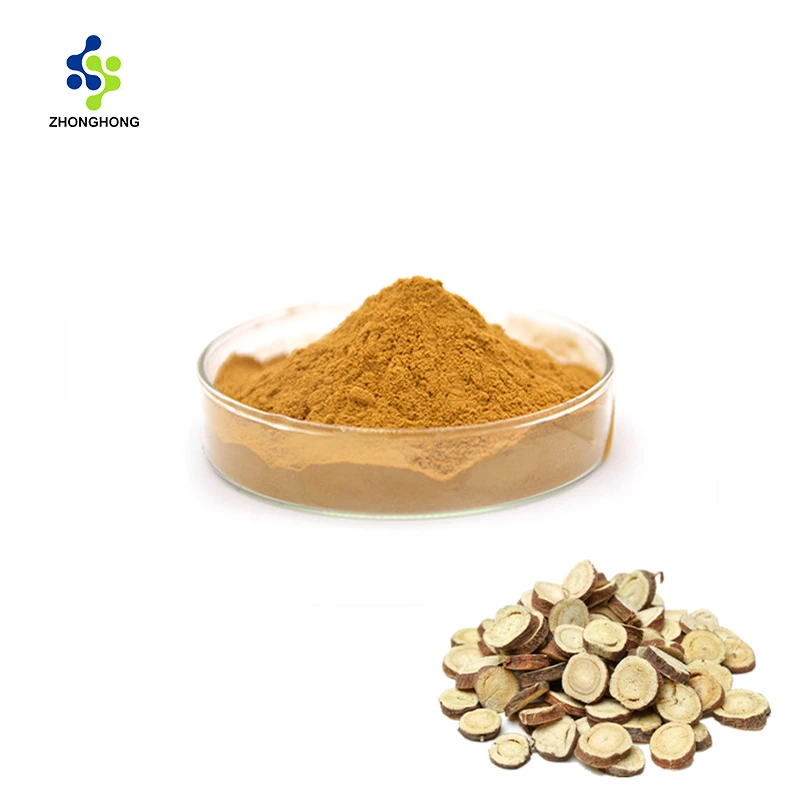
Glycyrrhiza Glabra Extract (Licorice Root Extract)
High-Purity Botanical Ingredient for Cosmetics, Nutraceuticals & Pharmaceuticals
Supplier: AIHerba® | Shaanxi Zhonghong Investment Technology Co., Ltd.
📧 sales@aiherba.com | info@aiherba.com | liaodaohai@gmail.com
🌐 www.aiherba.com
1. Product Overview
Glycyrrhiza Glabra Extract, also known as Licorice Root Extract, is derived from the roots of Glycyrrhiza glabra L., a leguminous plant native to Asia and the Mediterranean region. Rich in glycyrrhizin, glabridin, and flavonoids, this extract is valued for its anti-inflammatory, antioxidant, and brightening properties, making it a popular functional ingredient in cosmetics, pharmaceuticals, and health supplements.
AIHerba® supplies high-purity Glycyrrhiza Glabra Extract produced under GMP, ISO, and HACCP standards, using advanced water-ethanol and supercritical CO₂ extraction to retain maximum bioactivity and purity.
2. Product Source & Botanical Origin
-
Botanical Name: Glycyrrhiza glabra L.
-
Family: Fabaceae (Leguminosae)
-
Used Part: Root
-
Extraction Solvent: Water/Ethanol
-
Active Ingredients: Glycyrrhizin (≥10%~98%), Glabridin (≥10%), Liquiritin, Flavonoids
3. Key Benefits & Functional Properties
(1) Cosmetic & Skin Care Benefits
-
Skin Brightening: Glabridin inhibits tyrosinase, reducing dark spots and pigmentation.
-
Anti-inflammatory: Soothes redness, acne, and eczema-prone skin.
-
Antioxidant Protection: Neutralizes free radicals and prevents premature aging.
-
Moisturizing & Barrier Support: Enhances skin hydration and elasticity.
(2) Pharmaceutical & Nutraceutical Benefits
-
Anti-inflammatory & Antiviral: Glycyrrhizin supports immune modulation and viral defense.
-
Respiratory Health: Traditionally used to relieve cough, sore throat, and bronchitis.
-
Digestive Support: Helps protect gastric mucosa and promotes digestive comfort.
-
Liver Protection: Supports detoxification and liver cell regeneration.
4. Traditional Applications
For centuries, licorice has been used in Traditional Chinese Medicine (TCM), Ayurveda, and Unani systems for harmonizing formulas, enhancing absorption, and reducing toxicity of other herbs. It’s also a key herb in classic formulas such as Gan Cao Tang and Shaoyao Gan Cao Tang.
5. Recommended Dosage & Usage Guide
-
Dietary Supplements: 100–500 mg/day (standardized extract)
-
Cosmetic Formulations: 0.1–2% (skin-brightening or anti-inflammatory creams)
-
Functional Beverages: 0.05–0.5% depending on formulation
Adjust dosage based on formulation type and regional regulatory guidelines (FDA, EFSA, CFDA).
6. Optimal Formulation Guidance
-
Synergistic Blends: Combine with Niacinamide, Alpha Arbutin, Vitamin C, or Green Tea Extract for brightening skincare.
-
Pharmaceutical Use: Suitable for inclusion in anti-inflammatory, anti-ulcer, and immune-support formulations.
-
Delivery Systems: Works well in liposomes, gels, or emulsions for enhanced bioavailability.
7. Product Specifications (Typical COA Summary)
| Category | Item | Specification | Test Method |
|---|---|---|---|
| Assay | Glycyrrhizin | ≥ 20.0% | HPLC |
| Glabridin | ≥ 10.0% | HPLC | |
| Appearance | Fine Brownish-Yellow Powder | Visual | |
| Loss on Drying | ≤ 5.0% | AOAC 925.45 | |
| Ash Content | ≤ 5.0% | AOAC 923.03 |
Pesticide Residue
| Pesticide | Limit (mg/kg) | Test Method |
|---|---|---|
| DDT | ≤ 0.05 | GC-MS |
| BHC | ≤ 0.05 | GC-MS |
| Aldrin/Dieldrin | ≤ 0.02 | GC-MS |
| PCNB | ≤ 0.05 | GC-MS |
Heavy Metals
| Element | Limit | Test Method |
|---|---|---|
| Lead (Pb) | ≤ 3 ppm | ICP-MS |
| Arsenic (As) | ≤ 2 ppm | ICP-MS |
| Cadmium (Cd) | ≤ 1 ppm | ICP-MS |
| Mercury (Hg) | ≤ 0.1 ppm | ICP-MS |
Microbiological Tests
| Parameter | Limit | Test Method |
|---|---|---|
| Total Plate Count | ≤ 1,000 cfu/g | USP <61> |
| Yeast & Mold | ≤ 100 cfu/g | USP <61> |
| E. coli | Negative | USP <62> |
| Salmonella | Negative | USP <62> |
| Staphylococcus aureus | Negative | USP <62> |
8. Production Process
Flow Chart:
Raw Material Selection → Cleaning & Drying → Grinding → Water/Ethanol Extraction → Filtration → Concentration → Spray Drying → Sieving → Quality Testing → Packaging
Technology:
-
Extraction: Water-Ethanol
-
Purification: Membrane Filtration
-
Drying: Spray or Vacuum Drying
-
Standardization: HPLC-verified glycyrrhizin content
9. Storage, Shelf Life & Packaging
-
Storage: Store in a cool, dry, and dark place (<25°C), tightly sealed.
-
Shelf Life: 24 months from production date.
-
Packaging: 1kg/Aluminum Foil Bag; 25kg/Drum.
-
Sample Policy: Free 20–50g sample available on request.
-
MOQ: 1 kg for test order; bulk order ≥25 kg.
-
Shipping: By air (DHL/FedEx) or sea (FOB/CIF terms).
10. Application Industries & Use Cases
-
Cosmetics: Whitening, anti-aging, soothing creams, facial serums.
-
Pharmaceuticals: Anti-inflammatory, respiratory, and liver-protection products.
-
Nutraceuticals: Immune support, digestive health supplements.
-
Food & Beverage: Functional teas, herbal drinks, and natural sweeteners.
11. Certifications & Quality Assurance
-
GMP / ISO 9001 / HACCP / HALAL / KOSHER Certified
-
Complies with USP, EP, and CP quality standards
-
COA, MSDS, and third-party testing available upon request
-
Traceable supply chain from Shaanxi Zhonghong Investment Technology Co., Ltd.
12. Frequently Asked Questions (FAQ)
Q1: What’s the difference between Glycyrrhizin and Glabridin?
A1: Glycyrrhizin is responsible for sweetness and anti-inflammatory effects; Glabridin is a flavonoid with strong skin-brightening activity.
Q2: Can Glycyrrhiza Glabra Extract be used in food and cosmetics simultaneously?
A2: Yes. It is widely accepted as safe under recommended dosage levels by FDA and EFSA for both applications.
Q3: Is your extract standardized and batch-consistent?
A3: Yes, all batches are standardized and HPLC-tested for glycyrrhizin content and purity consistency.
Q4: Do you provide customized extract ratios or OEM formulations?
A4: Absolutely. AIHerba® provides OEM & ODM services including customized actives, flavoring, and encapsulation.
13. References & Research Links
-
FDA GRAS Notice No. 746 – Licorice Extract Safety Assessment
-
European Pharmacopoeia (Ph. Eur.) Monograph 01/2008:0409 (Licorice Root/Liquid Extract).
-
US Pharmacopeia (USP) – General Chapters: <561> Articles of Botanical Origin, <2023> Identification of Articles of Botanical Origin by HPTLC, <561> Residue Pesticide Analysis.
-
Fiore, C., Eisenhut, M., Ragazzi, E., Zanchin, G., & Armanini, D. (2005). A history of the therapeutic use of liquorice in Europe. Journal of Ethnopharmacology, 99(3), 317-324.
-
Nazari, S., Rameshrad, M., & Hosseinzadeh, H. (2017). Toxicological effects of Glycyrrhiza glabra (licorice): a review. Phytotherapy Research, 31(11), 1635-1650.
-
Yu, X. Q., Xue, C. C., Zhou, Z. W., Li, C. G., & Du, Y. M. (2008). In vitro and in vivo neuroprotective effect and mechanisms of glabridin, a major bioactive flavonoid from radix glycyrrhizae. Journal of Agricultural and Food Chemistry, 56(18), 8385-8391.
-
ICH Guidelines: Q3C (R8) Impurities: Residual Solvents, Q1A(R2) Stability Testing.
-
EFSA (European Food Safety Authority) Compendium of Botanicals. Glycyrrhiza species.
-
German Commission E Monographs: Licorice Root / Licorice Fluid Extract. Bundesanzeiger (BAnz) No. 85 (May 5, 1988). (Note: Provides traditional usage context and cautions).
-
Shaanxi Zhonghong Internal Technical Dossiers & Analytical Method Validations. (Note: Represents proprietary quality data).
14. Why Choose AIHerba®
With 28+ years of R&D and manufacturing experience, AIHerba® (Shaanxi Zhonghong Investment Technology Co., Ltd.) is a trusted GMP-certified herbal extract manufacturer. We specialize in high-purity natural ingredients, offering bulk supply, OEM & ODM formulation services, and global delivery for industries in cosmetics, pharmaceuticals, and functional foods.
✅ Consistent Quality
✅ Global Export Experience (EU, USA, Japan, Korea)
✅ Advanced Extraction Technologies (CO₂, Water-Ethanol, Fermentation)
✅ Traceable Supply Chain & Fast Logistics