Colchicine (API Grade) — High-Purity Active Ingredient for Pharmaceutical Applications
Colchicine remains one of the most important alkaloids used in modern medicine—widely known for its role in gout therapy, inflammation modulation, cell-division inhibition, and specialized research applications. At AIHerba® (Shaanxi Zhonghong Investment Technology Co., Ltd.), we produce pharmaceutical-grade Colchicine under strict GMP-certified systems, ensuring consistency, traceability, and regulatory compliance for global manufacturers.
With more than 28 years of extraction, purification, and pharmaceutical ingredient R&D, our factory supplies bulk Colchicine powder to pharmaceutical formulators, research institutions, and nutraceutical developers who require validated purity and dependable lot-to-lot performance.
Whether you’re searching for a Colchicine supplier, evaluating a new API manufacturer, or comparing wholesale specifications and price, this page provides everything needed to make an informed sourcing decision.
1. What Is Colchicine? (Product Overview)
Colchicine is a naturally occurring alkaloid originally isolated from Colchicum autumnale (Autumn Crocus). Today, it is produced through advanced extraction and multi-step purification processes to meet global pharmaceutical standards.
Key characteristics:
-
CAS No.: 64-86-8
-
Molecular Formula: C₂₂H₂₅NO₆
-
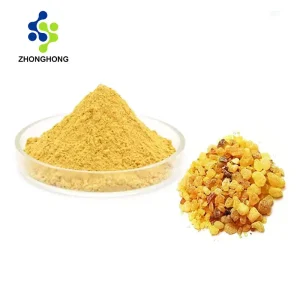
Appearance: White to off-white crystalline powder
-
Purity: 98%–99% (HPLC)
-
Grade: Pharmaceutical / API
Colchicine is known for its ability to:
-
Inhibit microtubule polymerization
-
Reduce inflammatory response
-
Lower neutrophil activity
-
Slow cell proliferation
2. Source & Botanical Origin
Colchicine has traditionally been sourced from:
-
Colchicum autumnale (primary botanical source)
-
Colchicum luteum
-
Gloriosa superba (used in some extraction processes globally)
At AIHerba®, we use controlled, traceable botanical raw materials, supported by pesticide monitoring and heavy-metal compliance.
3. Mechanisms of Action & Key Benefits
Validated Pharmacological Actions
(1) Anti-Inflammatory Activity
Colchicine decreases neutrophil migration and inflammatory cytokines, making it widely used in acute gout and familial Mediterranean fever (FMF).
(2) Microtubule Inhibition
It disrupts microtubule assembly, providing applications in cell biology, chromosomal research, and oncology studies.
(3) Cardiac & Vascular Applications
Recent trials explore colchicine in atherosclerosis, post-MI inflammation, and pericarditis.
(4) Potential Antiviral and Anti-Fibrotic Effects
Emerging evidence suggests regulatory effects on cytokine storms and fibrosis pathways.
Health-Related Advantages
-
Helps relieve joint pain & swelling
-
Supports cardiovascular inflammation management (supervised medical use)
-
Used in regulated prescription medications
-
Valuable in molecular biology and cytogenetic analysis
4. Traditional Uses
Historically, extracts containing colchicine were used for:
-
Painful inflammatory conditions
-
Swelling and gout
-
Edema and “heat” symptoms in Greek and Middle Eastern medicine
-
Botanical research to induce polyploidy in plants
5. Recommended Usage (For Manufacturers Only)
⚠ Colchicine is an API and prescription-controlled ingredient. End-users must follow local medical regulations.
Typical pharmaceutical manufacturing uses:
-
Oral tablets / capsules
-
Injectables (where legally approved)
-
Topical formulations (clinical)
-
Research reagents
Typical API inclusion levels range from 0.5 mg – 1.5 mg per dosage unit, depending on regulatory requirements.
6. Best Formulation Practices
For formulators developing new products:
-
Use microcrystalline cellulose or mannitol to stabilize dosage units
-
Pair with enteric coatings for reduced gastrointestinal irritation
-
Maintain anhydrous conditions to protect stability
-
Ensure HPLC fingerprint consistency across batches
7. Certificate of Analysis (COA) – Typical Specifications
1) General Specs
| Item | Specification | Method |
|---|---|---|
| Appearance | White to off-white powder | Visual |
| Purity | ≥ 98% | HPLC |
| Identification | Conforms | HPLC/IR |
| Residue on Ignition | ≤ 0.5% | USP |
| Loss on Drying | ≤ 1.0% | USP |
| Assay | 98%–102% | HPLC |
2) Pesticide Residue Panel
| Pesticide Item | Limit | Method |
|---|---|---|
| Organochlorine pesticides | ≤ 0.1 mg/kg | GC-MS |
| Organophosphorus pesticides | ≤ 0.2 mg/kg | GC-MS |
| Pyrethroids | ≤ 0.2 mg/kg | GC-MS |
| Carbamates | ≤ 0.1 mg/kg | LC-MS/MS |
3) Heavy Metals Panel
| Heavy Metal Item | Limit | Method |
|---|---|---|
| Lead (Pb) | ≤ 2.0 ppm | ICP-MS |
| Arsenic (As) | ≤ 1.0 ppm | ICP-MS |
| Cadmium (Cd) | ≤ 1.0 ppm | ICP-MS |
| Mercury (Hg) | ≤ 0.1 ppm | ICP-MS |
| Total Heavy Metals | ≤ 10 ppm | USP <231> |
4) Microbiological Profile
| Microorganism | Limit | Method |
|---|---|---|
| Total Plate Count | < 1,000 CFU/g | USP |
| Yeast & Mold | < 100 CFU/g | USP |
| E. coli | Negative | USP |
| Salmonella | Negative | USP |
| Staphylococcus aureus | Negative | USP |
| Pseudomonas aeruginosa | Negative | USP |
8. Production Technology
Our GMP plant integrates:
-
Botanical extraction
-
Solvent purification
-
Fractional crystallization
-
HPLC refinement
-
Low-temperature drying
-
Final sterile milling and sieving
Production Flow (Simplified)
Raw Materials → Solvent Extraction → Purification → Crystallization → Filtration → Drying → Milling → Sieving → QC Testing → Packaging → Final Release
9. Packaging, Storage & Shelf Life
Packaging Options
-
1 kg aluminum foil bag
-
5 kg / 10 kg vacuum-sealed drum
-
25 kg fiber drum (standard export)
Storage Requirements
-
Store in a cool, dry place
-
Protect from light and heat
-
Temperature below 25°C recommended
Shelf Life
-
24–36 months unopened
10. Sample Policy, MOQ & Logistics
-
Free sample (≤10 g) available for testing — ideal for buyers evaluating herbal extract quality or creating customized herbal extract formulations
-
MOQ: 1 kg
-
Lead Time: 3–7 days
-
Shipping: DHL, FedEx, UPS, air freight, or sea freight
-
Export documents: COA, MSDS, TDS, GMP certificates, commercial invoice
11. Industries & Applications
Primary Industries
-
Pharmaceutical manufacturers
-
Biotechnology companies
-
Research laboratories
-
Cytogenetic and plant-science institutions
Application Scenarios
-
Prescription drug production
-
Anti-inflammatory formulations
-
Gout medications
-
Cardiovascular inflammation therapy research
-
Chromosomal doubling in plants (controlled scientific use)
12. Why Choose AIHerba® as Your Colchicine Supplier?
-
28+ years of extraction + pharmaceutical purification experience
-
GMP-certified production line and validated analytical methods
-
Global customers across pharma, biotech, and research industries
-
Traceable botanical sourcing with full documentation
-
Strong R&D capability for customized herbal extract solutions
-
Fast production, fast delivery, and stable bulk capacity
-
Transparent communication + expert technical support
-
Trusted China manufacturer with competitive wholesale options
Contact:
📧 sales@aiherba.com | info@aiherba.com | liaodaohai@gmail.com
🌐 www.aiherba.com
13. FAQ (Expert-level)
Q1. Is your Colchicine compliant with international pharmacopeias?
Yes. We produce according to USP / EP / ChP requirements and provide supporting test data.
Q2. Can I request a customized specification?
Absolutely. We support tailored purity levels, particle sizes, and packaging.
Q3. Is Colchicine stable in tablet formulations?
Yes—when stored in low-moisture conditions and paired with appropriate excipients.
Q4. Can you provide real batch COA and chromatograms?
Yes, upon request we share HPLC fingerprints, MS data, and QC reports.
Q5. Do you support contract manufacturing (OEM / ODM)?
Yes, especially for pharmaceutical intermediates and functional formulation projects.
14. Scientific References (PubMed, NIH, FDA)
-
Terkeltaub R. Colchicine update: 2022. Arthritis Rheum.
-
FDA Drug Database – Colchicine.
-
NIH – National Library of Medicine: Colchicine pharmacology.
-
Crittenden DB, et al. Colchicine and cardiovascular inflammation.
-
PubMed: Microtubule disruption and colchicine mechanisms.