
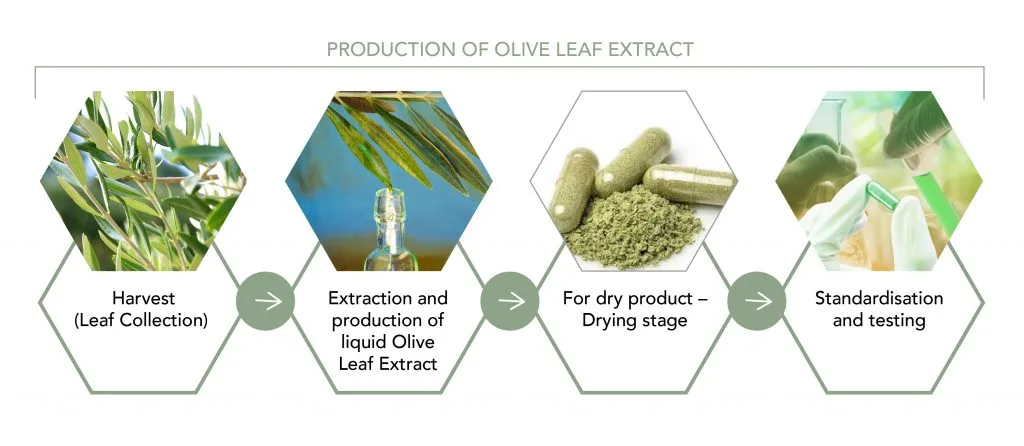
Olive leaf extract is a botanical ingredient, while oleuropein is a specific compound that can be used to standardize it. For ingredient buyers, this distinction determines how a product should be specified, tested and compared with competing offers.
When sourcing olive leaf extract for supplements, beverages or cosmetic development, start with the required composition and application. A percentage, extraction ratio or product name alone does not define the material you will receive.
Explore AIHerba’s olive leaf extract product information and use the following criteria to prepare a clear request for specifications and pricing.
Olive Leaf Extract vs. Oleuropein vs. Hydroxytyrosol
These names describe different purchasing targets.
| Ingredient | What the name describes | What buyers should specify |
|---|---|---|
| Olive leaf extract | A mixture obtained from the leaves of Olea europaea L. | Plant part, extraction process, composition and selected marker content |
| Oleuropein-standardized olive leaf extract | An olive leaf extract controlled against an oleuropein specification | Oleuropein assay, method, reporting basis and carrier declaration |
| High-purity oleuropein | A more extensively purified material centered on a specific compound | Identity, quantitative assay, related substances and intended use |
| Hydroxytyrosol ingredient | A different compound, supplied in a defined commercial composition | Hydroxytyrosol content, production origin, physical form and complete composition |
PubChem identifies oleuropein as a secoiridoid glycoside. Hydroxytyrosol has a different molecular identity. The two should not be treated as interchangeable assay names.
If hydroxytyrosol is the required purchasing target, review the hydroxytyrosol ingredient and bulk supply page rather than selecting an olive leaf extract only by its oleuropein percentage.
How to Specify an Oleuropein-Standardized Extract
A useful purchasing specification connects the botanical source, chemical composition and delivered powder.
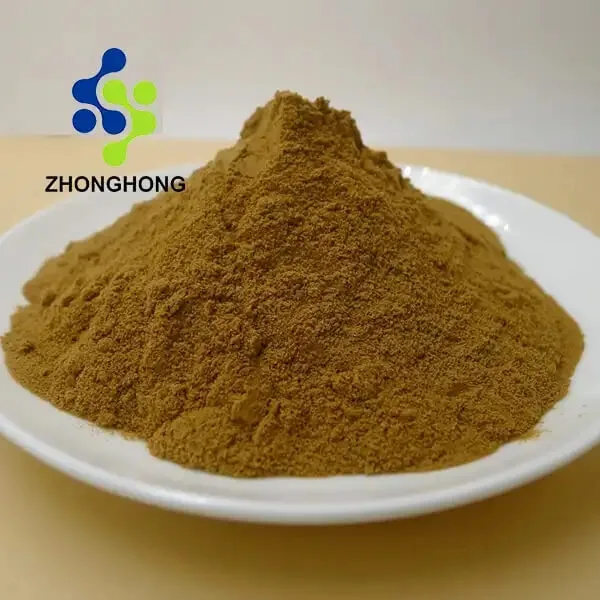
Ask the supplier to confirm:
-
Botanical name and plant part.
-
Product code and available oleuropein specification.
-
Whether the result is reported as-is or on a dry basis.
-
Extraction solvents and relevant residual-solvent controls.
-
Added carriers, processing aids and their declared proportions.
-
Physical properties required for your manufacturing process.
-
Batch identification and the documents supplied with shipment.
An extraction ratio such as 10:1 does not replace an oleuropein assay. Ask how the ratio is calculated and whether it refers to the native extract or the final material after added ingredients.
Likewise, a standardized botanical extract and an isolated compound should not share an identical purchasing specification simply because both mention oleuropein.
HPLC Testing: What Should the COA Actually Show?
HPLC can support oleuropein analysis, but the instrument name alone is insufficient. Ask what the procedure measures, how the compound is identified and how the result is calculated.
A chromatographic area percentage is not automatically equivalent to a quantitative mass-percentage assay. Confirm the use of a suitable reference standard and the reporting basis before comparing supplier results.
A practical analytical review should cover:
| Review point | Question for the supplier |
|---|---|
| Identity | How is the oleuropein signal identified and distinguished from other components? |
| Quantification | Is the result an area percentage or a quantitative assay against a reference standard? |
| Reporting basis | Does the percentage refer to the delivered material or moisture-corrected material? |
| Method suitability | Has the procedure been shown to work for this extract matrix? |
| Traceability | Does the report identify the same lot as the evaluation sample? |
The ICH Q2(R2) analytical validation guideline provides a reference framework for evaluating analytical procedures in its pharmaceutical scope. Its inclusion here is not a claim that a particular AIHerba ingredient or method is ICH-validated.
Request the available oleuropein specification and batch COA for the grade under consideration.
Selecting Olive Leaf Extract for Your Application
Capsules and tablets
Evaluate the required ingredient loading together with bulk density, powder flow and the behavior of the final blend. Confirm filling or compression performance on suitable equipment.
A higher marker percentage may reduce the amount of extract needed to meet a defined analytical target, but it does not by itself establish equivalent clinical performance.
Beverages and drink powders
Request solubility or dispersion information with test conditions: concentration, temperature, pH, mixing method and observation time.
Test flavor, color, haze and sediment in the actual beverage. A clear result in water does not establish performance after adding the other ingredients or applying the production process.
Cosmetic development
Confirm the identity and composition documentation needed for the intended cosmetic ingredient. Evaluate compatibility, appearance and stability in the finished formulation.
Do not infer finished-product preservation, efficacy or safety from an antioxidant description alone.
Batch Documents and Quality Requirements
Request both a specification sheet and a batch-specific COA. The specification sets acceptance criteria; the COA records the results for an identified lot.
Depending on the project, the purchasing package may also need a technical data sheet, safety data sheet, composition statement, traceability information and relevant contaminant reports.
Agree on the required heavy-metal, microbiological, pesticide and residual-solvent parameters for the intended market. For an “ND” result, ask for the applicable detection or quantification limit.
For repeat supply, define change-notification requirements for the raw material, extraction process, carrier composition and analytical method.
Comparing Bulk Olive Leaf Extract Prices
Compare quotations against the same specification. Differences in assay basis, carrier content, testing scope, packaging and delivery terms can make apparently similar prices misleading.
Ask each supplier to separate the material price, freight, additional testing and sample charges. Record the minimum order and current lead time in the quotation.
Evaluate the usable cost in your formulation, including handling and validation work. A low price per kilogram is not necessarily the lowest cost for an ingredient that consistently meets your requirements.
Request Olive Leaf Extract Specifications and a Quote
AIHerba supplies olive leaf extract to business customers. Send the following details to help us identify the appropriate grade and documentation:
-
Target oleuropein specification and preferred test method.
-
Intended application and destination country.
-
Carrier restrictions and required quality documents.
-
Sample quantity, initial order quantity and expected repeat demand.
-
Delivery location and project timeline.
Current specifications, sample availability, fees, packaging and lead time are confirmed for the requested grade.
Request Olive Leaf Extract COA & Bulk Pricing
Email: sales@aiherba.com
Frequently Asked Questions
Is olive leaf extract the same as oleuropein?
No. Olive leaf extract is a botanical mixture. Oleuropein is a specific compound that may be measured as a standardization marker or supplied as a more highly purified material.
Can oleuropein content be used as the hydroxytyrosol content?
No. They are different compounds and require separately defined analytical specifications.
Does a higher oleuropein percentage always mean a better ingredient?
Not for every application. Select against the full specification, manufacturing requirements and supporting evidence rather than the percentage alone.
Can I request a sample before placing a bulk order?
Yes, you can submit a sample request. Availability, sample charges, shipping and any additional testing are confirmed for the specific material and destination.